

Red Light Therapy at Home: Setup, Placement & Safety Guide
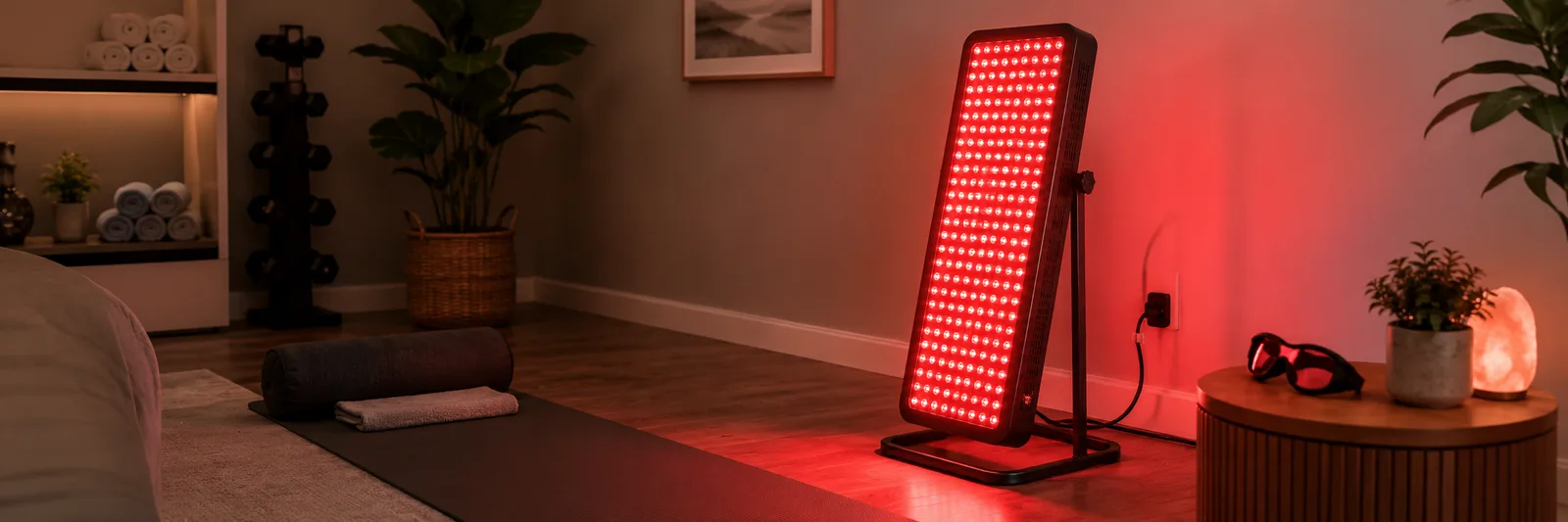
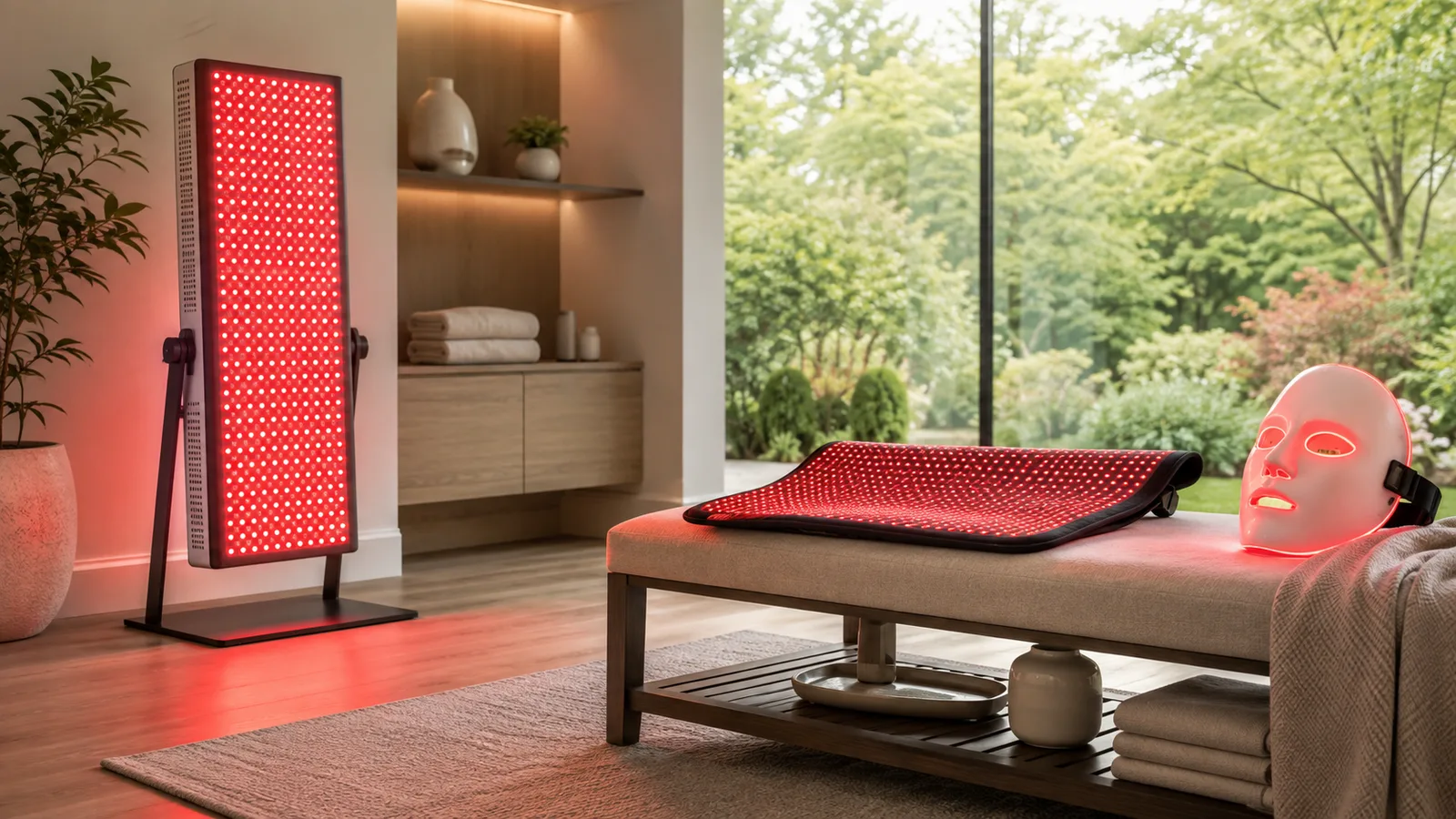
Red light therapy devices are available in many formats for home use, from compact masks and wearable devices to flexible pads and large freestanding or wall-mounted panels.
Setting up red light therapy at home involves more than simply choosing a device. You also need to consider where it will be used, the manufacturer's recommended treatment distance, electrical access, mounting or stand requirements, ventilation, eye-safety instructions, and the amount of room needed to position yourself comfortably.
Device specifications and operating instructions vary considerably by model. A facial mask, body pad, handheld device, and full-body panel may each require a different setup.
This guide focuses on the practical side of creating a red light therapy space at home, including placement, positioning, device formats, safety considerations, and what to review before you begin.
In this article
- Understanding Red Light Therapy for Home Use
- Types of Red Light Therapy Devices for Home Use
- Setting Up Red Light Therapy at Home
- Understanding Red Light Therapy Device Specifications
- Important Notice
- Adding Red Light Therapy to a Home Wellness Space
- What Does Research Say About Red Light Therapy?
- Common Questions About Red Light Therapy at Home
Understanding Red Light Therapy for Home Use
Red light therapy uses specific wavelengths of visible red light and, in some devices, near-infrared light. In research and clinical settings, this type of light exposure may also be referred to as photobiomodulation.
Devices vary in wavelength, light output, coverage area, treatment distance, controls, and intended use. There is no single wavelength, intensity, distance, or session length that applies to every red light therapy device.
For home use, the most important starting point is the documentation for the specific product you own or are considering. Follow the manufacturer's instructions for positioning, treatment distance, duration, frequency, eye protection, and other safety requirements.
For a closer look at potential applications and current research, read our Red Light Therapy Benefits: What to Know for Home Use.
Types of Red Light Therapy Devices for Home Use
Red Light Therapy Panels
Panels range from compact tabletop models to larger freestanding or wall-mounted systems. Depending on their size and design, they may provide coverage for a targeted area or a larger portion of the body.
When comparing panels, review the dimensions, recommended treatment distance, stand or mounting requirements, electrical specifications, controls, and stated coverage area.
Face Masks
Red light therapy masks are designed specifically for facial coverage. Their wearable design may require less dedicated floor space than a panel.
Review the manufacturer's wavelength specifications, session instructions, fit, controls, charging or electrical requirements, and eye-safety guidance.
Pads and Wraps
Flexible pads and wraps are designed to position light close to or directly against particular areas of the body, depending on the product.
Check whether the device is designed for direct contact, how it should be positioned, and whether straps, controllers, power supplies, or other components are included.
Wearable and Targeted Devices
Smaller devices may include hats, scalp devices, handheld equipment, armbands, and other targeted formats.
These can require less storage space than larger panels, but coverage area, intended use, positioning, and operating instructions vary by model.
Full-Body Systems
Larger red light therapy systems are designed to provide broader coverage and may require more floor or wall space.
Before purchasing, review overall dimensions, stand or mounting requirements, recommended user distance, electrical access, room clearance, and the amount of space needed to position yourself comfortably.
Setting Up Red Light Therapy at Home
Start by reviewing the installation and operating instructions for your specific device. Setup requirements can differ significantly between a wearable device, flexible pad, tabletop unit, and large panel.
Consider the following when selecting a location:
- Recommended treatment distance: Position the device according to the manufacturer's instructions rather than using a universal distance.
- Available space: Allow enough room for the device, stand or mount, and the recommended user position.
- Electrical access: Confirm the required outlet, voltage, and electrical specifications before use.
- Mounting or stand requirements: Determine whether the device is designed for wall mounting, a floor stand, tabletop placement, or another configuration.
- Ventilation: Keep any vents or cooling areas unobstructed and follow manufacturer clearance requirements.
- Cable management: Position power cords where they are less likely to create a trip hazard or come into contact with water.
- Eye safety: Follow the manufacturer's instructions regarding eye protection and whether direct viewing of the LEDs should be avoided.
- Storage: Consider where portable equipment, controllers, eyewear, stands, and accessories will be kept between uses.
- Heat and moisture: Follow the manufacturer's environmental requirements and keep standard devices away from excessive heat, moisture, or humidity unless specifically approved for those conditions.
The best location is one that allows you to follow the manufacturer's positioning and safety instructions without creating unnecessary obstacles in the room.
Understanding Red Light Therapy Device Specifications
Red light therapy specifications can look complicated, but several measurements can help you compare devices.
Wavelengths: Manufacturers typically list the red and near-infrared wavelengths produced by the device. Different products may use one wavelength or several wavelengths in combination.
Irradiance or light output: Some manufacturers publish irradiance measurements, often expressed in milliwatts per square centimeter (mW/cm²). When comparing these numbers, check the distance at which the measurement was taken.
Coverage area: Review the area the manufacturer states the device can illuminate at its recommended positioning distance.
Treatment distance: Some devices are designed for direct or near-direct contact, while others require the user to stand or sit farther away.
Session duration and frequency: These should come from the instructions for the specific device rather than a general red light therapy schedule.
Controls: Depending on the model, controls may include timers, intensity adjustments, wavelength selection, pulsing settings, or preset programs.
Specifications should be evaluated together. A single wavelength or irradiance number does not by itself determine whether one device is better suited to your needs.
Important Notice
This article is provided for general informational and product-comparison purposes only. It is not medical advice and should not be used to diagnose, treat, cure, or prevent any disease or medical condition.
Red light therapy devices vary in wavelength, light output, intended use, positioning requirements, treatment duration, and safety instructions. Follow the documentation supplied with your specific device.
Pay particular attention to manufacturer guidance regarding treatment distance, session duration, frequency, eye protection, electrical requirements, positioning, contraindications, and operating environment.
Consult a qualified healthcare professional before use if you are pregnant, have an eye or skin condition, take medications that may cause photosensitivity, are undergoing medical treatment, or have questions about whether red light therapy is appropriate for you.
Product specifications, regulatory status, intended uses, warranties, and manufacturer instructions may change. Review current documentation for the exact product you are considering.
Adding Red Light Therapy to a Home Wellness Space
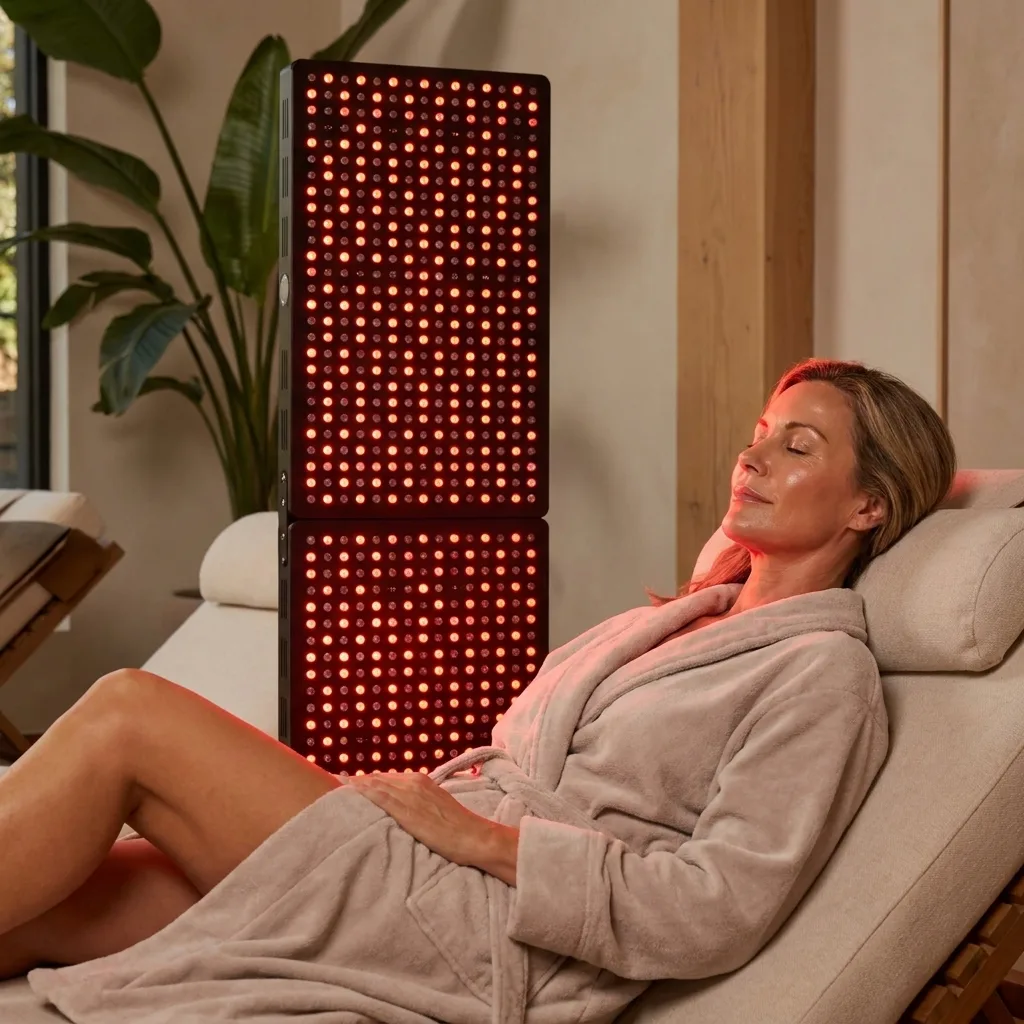
Red light therapy equipment can be incorporated into a bedroom, home gym, wellness room, or other suitable indoor space when the environment meets the manufacturer's requirements.
If the room also contains a sauna, steam shower, cold plunge, massage chair, or other wellness equipment, treat each product as a separate system with its own installation, electrical, operating, and safety requirements.
Do not place or operate a standard red light therapy device inside a sauna, steam shower, or other high-heat or high-humidity environment unless the manufacturer specifically approves the device for that use.
Leave enough room around each product for safe entry, exit, operation, maintenance, and any required clearances.
Explore Red Light Therapy Devices at Prime Regeneration to compare available device formats, specifications, features, and manufacturer warranty information.

Red light therapy devices are separate equipment. Many people use red light therapy as part of their wellness routine. You can explore contrast therapy options and infrared saunas as separate recovery tools. Refer to each device's manufacturer instructions for proper use.
Red light therapy can be used post-workout. A typical session is 15-20 minutes. The key is building a routine that feels natural to you, not forcing something complicated.
Morning or evening? Both are options. Pick whichever time you'll actually stick with, and follow your device manufacturer's guidance on frequency and duration.
What Does Research Say About Red Light Therapy?
Red light therapy and photobiomodulation have been studied for a variety of cosmetic, wellness, and therapeutic applications. Findings differ depending on the specific application, device, wavelength, dose, treatment area, duration, and study design.
Some applications have supportive clinical research, while evidence for other commonly promoted uses remains limited or developing. Results from a study involving one device or protocol should not automatically be applied to every consumer red light therapy product.
For a more detailed look at potential applications and current evidence, read our Red Light Therapy Benefits: What to Know for Home Use.
Common Questions About Red Light Therapy at Home
Where Should I Put a Red Light Therapy Device at Home?
Choose a location that provides enough space for the device and the manufacturer's recommended treatment distance. Also consider electrical access, stand or mounting requirements, ventilation, cable placement, and sufficient room to sit or stand comfortably.
How Far Should I Be From a Red Light Therapy Device?
There is no universal distance that applies to every device. Follow the positioning distance specified by the manufacturer of your particular model. Pads, masks, handheld devices, and large panels can have very different requirements.
What Should I Know About Eye Safety?
Follow the eye-safety instructions supplied with your specific device. Some manufacturers may recommend or require protective eyewear depending on the product, wavelengths, positioning, and intended use.
If you have an existing eye condition or concerns about light exposure, consult a qualified eye-care professional before use.
Can I Use Red Light Therapy Equipment Near a Sauna or Steam Shower?
A red light therapy device may be located elsewhere within a larger home wellness space when all manufacturer requirements are followed.
Do not operate a standard red light therapy device inside a sauna, steam shower, or other high-heat or high-humidity environment unless its manufacturer specifically states that the device is approved for those conditions.
Do I Need a Prescription to Buy a Red Light Therapy Device?
Many consumer red light therapy products are available for home purchase without a prescription, while regulatory classification and intended use vary by product.
Review the manufacturer's documentation and regulatory information for the specific device you are considering. FDA clearance for one device or intended use does not apply to every red light therapy product.


