Traditional vs Infrared Sauna for Home: Which to Choose
Two very different ways to bring heat home — and how to know which one belongs in yours.
Ask ten sauna owners what drew them to the ritual and you'll hear ten variations of the same answer: the heat. But the way that heat arrives — how it fills a room, how it meets the skin, how long it asks you to wait — differs profoundly between the two dominant styles of home sauna. Traditional and infrared are not two versions of the same thing. They are two distinct experiences that happen to share a name.
If you're weighing a home sauna, this is the first decision to make — before brands, before sizing, before placement. Here's how the two compare, and how to choose with confidence.
The Traditional Sauna: Heat as Atmosphere
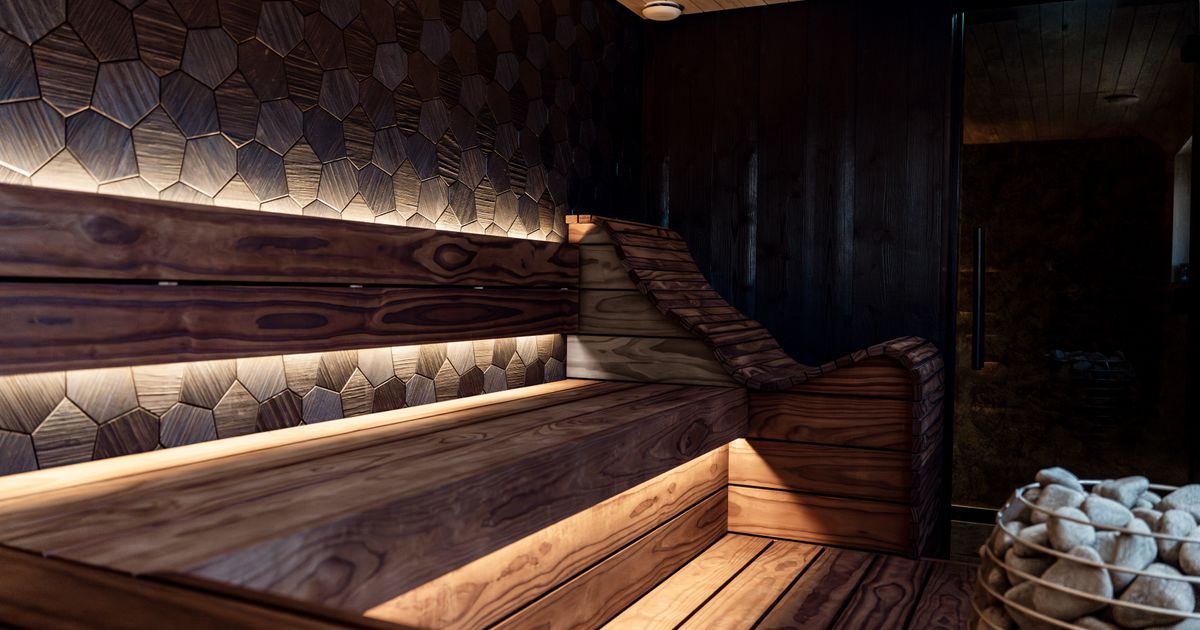
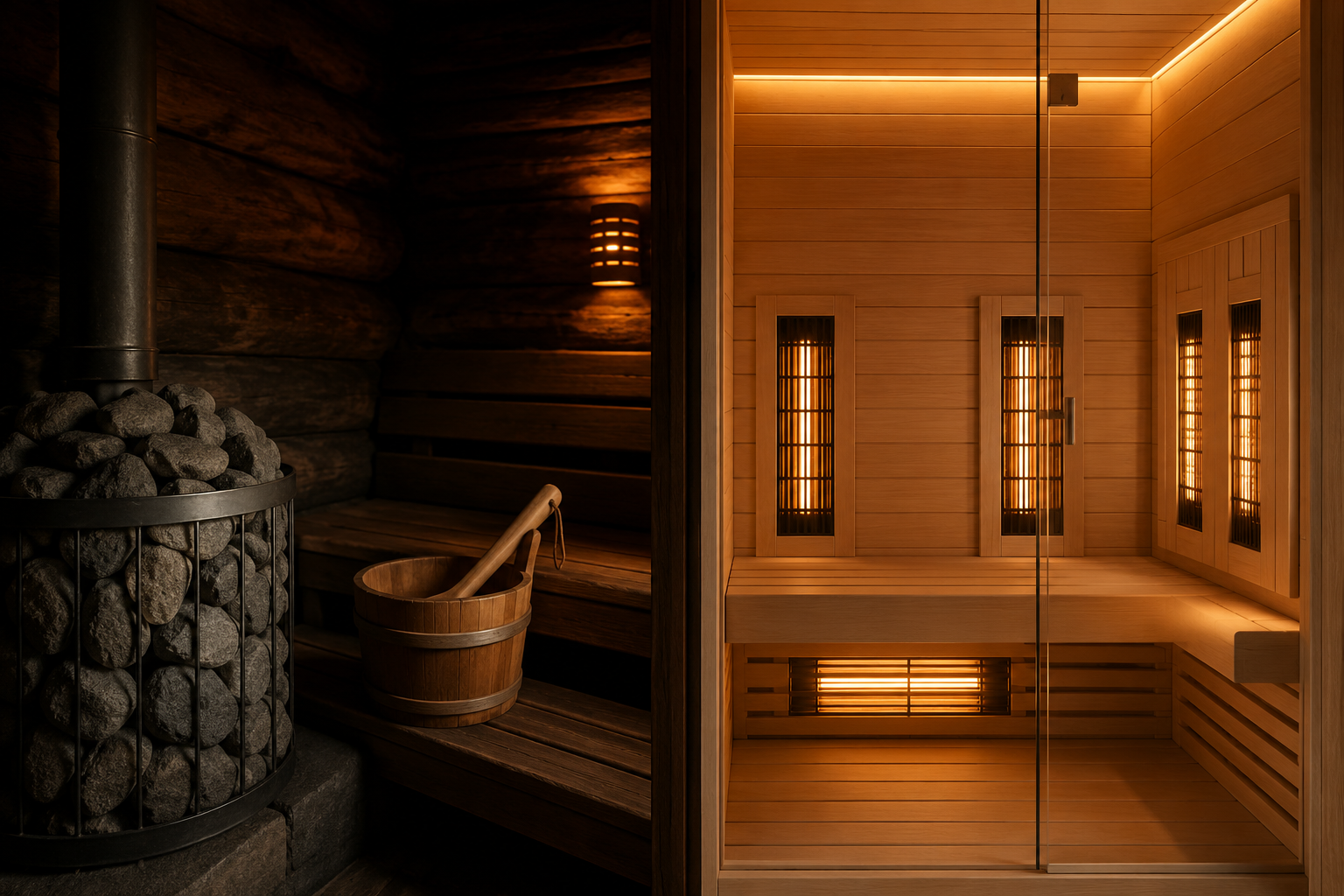
A traditional sauna — sometimes called a Finnish sauna — works by heating the air around you. A stove or electric heater warms a bed of stones, and the stones radiate that warmth into the cabin until the room itself becomes the source of heat. Air temperatures typically run between 150°F and 195°F.
Then there's löyly — the soft burst of steam that rises when you ladle water over the hot stones. It's the defining gesture of the traditional sauna: a momentary wave of humid heat that you control, bucket in hand. No infrared cabin can replicate it, and for purists, this alone settles the debate.
The experience: enveloping, intense, atmospheric. The heat surrounds you completely. Sessions tend to be shorter and more ceremonial — heat, rest, repeat.
What it asks of you: patience and infrastructure. A traditional sauna typically needs 30 to 45 minutes to come fully up to temperature, and most electric heaters require a dedicated 240V circuit installed by an electrician. Wood-fired stoves trade the wiring for a chimney and a supply of firewood — a romantic option for outdoor and backyard installations.
Where it shines: dedicated sauna rooms, backyard sauna cabins, and households that want the full Nordic ritual — stones, steam, and all. Heater quality matters enormously here; Finnish makers like Harvia and HUUM have spent decades refining the balance of stone mass, airflow, and design.
The Infrared Sauna: Heat as Precision
An infrared sauna takes the opposite approach. Instead of heating the air, its panels emit infrared warmth that you feel directly — the way sunlight feels warm on your skin even on a cool day. The cabin air stays comparatively mild, usually 115°F to 135°F, while the warmth you experience is immediate and focused.
The experience: gentler air, longer sessions. Because the ambient temperature is lower, many people find infrared sessions easier to settle into — comfortable enough to read, listen to music, or simply sit for 30 to 45 minutes without the intensity of a traditional hot room.
What it asks of you: very little. Most infrared cabins plug into a standard 120V outlet, reach temperature in 10 to 15 minutes, and arrive as flat-packed kits that assemble in an afternoon. No electrician, no plumbing, no chimney. Energy use is modest, too — infrared cabins generally draw less power per session than a traditional electric heater.
Where it shines: spare rooms, home gyms, basements, and anyone who wants a near-daily heat ritual without a renovation. Cabins like the Finnmark infrared series are designed precisely for this — premium materials, plug-in simplicity.
Side by Side
| Traditional Sauna | Infrared Sauna | |
|---|---|---|
| How it heats | Heats the air via stove and stones | Panels warm you directly |
| Air temperature | 150–195°F | 115–135°F |
| Steam / löyly | Yes — water over hot stones | No — dry, gentle warmth |
| Heat-up time | 30–45 minutes | 10–15 minutes |
| Electrical | Usually 240V dedicated circuit (or wood-fired) | Usually standard 120V outlet |
| Installation | Electrician or chimney; often a dedicated room or outdoor cabin | Flat-pack kit; assembles in hours |
| Session character | Intense, ceremonial, shorter | Mild, unhurried, longer |
| Best suited to | Dedicated spaces, backyard builds, tradition-minded owners | Spare rooms, apartments, convenience-first routines |
How to Choose
Choose traditional if the ritual itself is the point. If you want steam rising off stones, real Finnish intensity, and a space purpose-built for heat — and you're willing to run a 240V line or a chimney to get it — nothing else compares. This is the sauna as it has existed for centuries, and it rewards the commitment.
Choose infrared if consistency is the point. If the sauna you'll actually use four nights a week is the one that's ready in ten minutes, plugs into the wall, and fits in the room you already have, infrared is the honest answer. The best sauna is the one that becomes a habit.
And if you can't decide: think about where it will live. Outdoor or dedicated space with room to build — traditional. Indoor, shared, or space-constrained — infrared. The setting usually makes the decision for you.
Frequently Asked Questions
Is an infrared sauna a "real" sauna?
It's a different category of heat experience. Traditional saunas heat the air; infrared cabins warm you directly at lower ambient temperatures. Neither is more "real" — they simply suit different spaces, routines, and preferences.
Which is more expensive to run?
Infrared cabins generally use less electricity per session, since they heat panels rather than an entire volume of hot air and stone. Traditional electric heaters draw more power and run longer to reach temperature, though actual costs depend on local rates and how often you use it.
Can I put a traditional sauna indoors?
Yes — indoor traditional saunas are common, but they require proper ventilation, a heat-appropriate room, and a dedicated 240V circuit installed by a licensed electrician. Many owners find an outdoor cabin or a purpose-built room the cleaner path.
Do infrared saunas produce steam?
No. Infrared is a dry, gentle warmth with no water involved. If löyly — steam over hot stones — is essential to you, a traditional sauna is the only way to get it.
How long do the two take to heat up?
Infrared cabins are typically ready in 10 to 15 minutes. Traditional saunas need 30 to 45 minutes for the stones and cabin to come fully up to temperature.
Can I have both experiences at home?
Some owners pair a sauna with a cold plunge or a hot-and-cold immersion tub for warm soaks and cold water in one footprint. It's a different modality — water rather than sauna heat — but a natural companion to either style.
Explore the full collection of infrared saunas and Harvia and HUUM sauna heaters at Prime Regeneration — or read our complete infrared sauna buying guide for sizing, placement, and model comparisons.