Sauna Heater Sizing for Home Use: Complete Guide

Choosing the correct sauna heater size is one of the most important decisions when designing a home sauna. A properly sized heater delivers consistent temperatures, efficient performance, and a comfortable sauna experience, while the wrong size can lead to slow heat-up times, higher operating costs, and disappointing results. Fortunately, sizing a sauna heater is straightforward once you know your sauna's dimensions.
In this article
- The Golden Rule: Calculate Your Cubic Footage First
- Common Sauna Sizes and Their Heater Requirements
- Why Insulation Quality Changes Everything
- How to Use an Online Sauna Heater Sizing Tool
- The Undersizing Problem: What Happens When You Go Too Small
- The Oversizing Trap: Why Bigger Isn't Always Better
- Key Factors That Impact Your Heater Size Decision
- Step-by-Step: How to Size Your Sauna Heater
- Electric vs. Wood-Burning: Sizing Stays the Same
- Installation and Electrical Capacity Matter Too
- Common Mistakes to Avoid
- Where to Find Sizing Resources and Expert Help
The Golden Rule: Calculate Your Cubic Footage First
Here's what you need to know upfront: the industry standard is roughly 1 kilowatt (kW) of heater power for every 45-50 cubic feet of well-insulated sauna space. That's it. Everything else builds from there.
Start by measuring your sauna dimensions in feet. You'll need length, width, and height. Multiply those three numbers together and you've got your cubic footage. Easy math, massive impact on your final decision.
Let's walk through a few real-world examples so you can see how this works.
Common Sauna Sizes and Their Heater Requirements
4x4 Sauna (112 cubic feet)
This is entry-level home sauna territory. Your calculation: 4 ft × 4 ft × 7 ft (standard ceiling) = 112 cubic feet. Divide by 50 and you get 2.24 kW—so you're looking at a 3.0 kW heater to be safe. This size works for one to two people comfortably.
4x6 Sauna (168 cubic feet)
A step up for couples or small families. 4 ft × 6 ft × 7 ft = 168 cubic feet. That calls for a 4.5 kW heater. You'll get faster heat-up times and better temperature consistency with this wattage.
5x7 Sauna (245 cubic feet)
Now we're talking luxury home sauna. 5 ft × 7 ft × 7 ft = 245 cubic feet. You need a 6.0 kW heater minimum. This size comfortably accommodates four to six people and gives you serious performance.
Notice the pattern? Every time your space grows, the heater power grows proportionally. That's by design.
Why Insulation Quality Changes Everything
Here's where most people get tripped up. The 1 kW per 45-50 cubic feet rule assumes your sauna is well-insulated. If you're cutting corners on insulation—cheap foam, thin walls, single-pane glass—you'll lose heat fast and need a larger heater to compensate.
Think of it this way: a poorly insulated sauna is like trying to heat a house with all the windows open. Your heater works harder, your electricity bill explodes, and you never quite reach the temperature you want.
If you're building or buying a home sauna through Prime Regeneration, the units are designed with premium insulation in mind, so the standard sizing formula works directly without adjustment.
How to Use an Online Sauna Heater Sizing Tool
You don't have to do manual math if you don't want to. Most reputable sauna retailers—including Prime Regeneration—offer free online sizing calculators.
Here's what you'll input:
- Sauna interior length (in feet)
- Sauna interior width (in feet)
- Sauna interior height (in feet)
- Type of glass door(s) and window dimensions
- Insulation level (if you know it)
The tool spits back a recommended heater wattage in seconds. No guessing. No spreadsheets. Just accuracy.
The Undersizing Problem: What Happens When You Go Too Small
You picked a 3.0 kW heater for a 5x7 sauna to save $500. Here's what you get:
- 30-45 minute heat-up time instead of 15-20 minutes
- Temperature fluctuations (it climbs to 160°F then drops to 140°F)
- Inability to reach your target temperature on cold days
- Constant frustration every single time you use it
A sauna that underperforms is a sauna you'll use less. And equipment you don't use is just expensive furniture.
The Oversizing Trap: Why Bigger Isn't Always Better
On the flip side, cramming an 8.0 kW heater into a 4x4 sauna creates different problems:
- Rapid temperature spikes that feel uncomfortable
- Uneven heat distribution (one corner blasts at 180°F while another sits at 150°F)
- Higher electricity consumption and monthly utility costs
- Potential safety issues if the heater cycles too aggressively
Oversized heaters also tend to wear out faster because they're constantly powering down and back up. You're paying more upfront and more over time.
Key Factors That Impact Your Heater Size Decision
Ceiling Height Variations
Most residential saunas have 7-foot ceilings, but if yours is 8 feet or higher, add that extra cubic footage to your calculation. Every foot counts.
Glass Doors and Windows
A sauna with a large glass door or multiple windows loses heat faster than a solid-door model. Some sizing tools ask for glass dimensions because they affect insulation value. If your sauna has extensive glazing, you might bump up one half-size in heater capacity.
Sauna Location
Is your sauna in a finished basement (relatively stable temperature) or an unheated garage? Ambient temperature matters. A sauna in a cold garage might need slightly more power than one in a climate-controlled space.
Desired Temperature Range
Traditional Finnish saunas run 160-180°F. Infrared saunas operate around 120-150°F. If you want faster heat-up to higher temps, you need more wattage.
Step-by-Step: How to Size Your Sauna Heater
Step 1: Measure Interior Dimensions
Use a tape measure. Get length, width, and height in feet. Round up if you're between measurements.
Step 2: Calculate Cubic Footage
Length × width × height = cubic feet.
Step 3: Divide by 50
Cubic feet ÷ 50 = recommended kW.
Step 4: Round Up to the Nearest Half kW
A calculation of 3.2 kW rounds up to 3.5 kW. A 4.1 kW result rounds up to 4.5 kW. This gives you a safety margin.
Step 5: Verify With Your Sauna Manufacturer's Chart
Most sauna kits come with a sizing reference. Check it against your calculation. If there's a mismatch, the manufacturer's recommendation takes priority.
Step 6: Talk to an Expert if You're Unsure
This is why Prime Regeneration's team exists. Free consultation, no pressure. They'll review your dimensions and confirm the right heater size for your setup.
Electric vs. Wood-Burning: Sizing Stays the Same
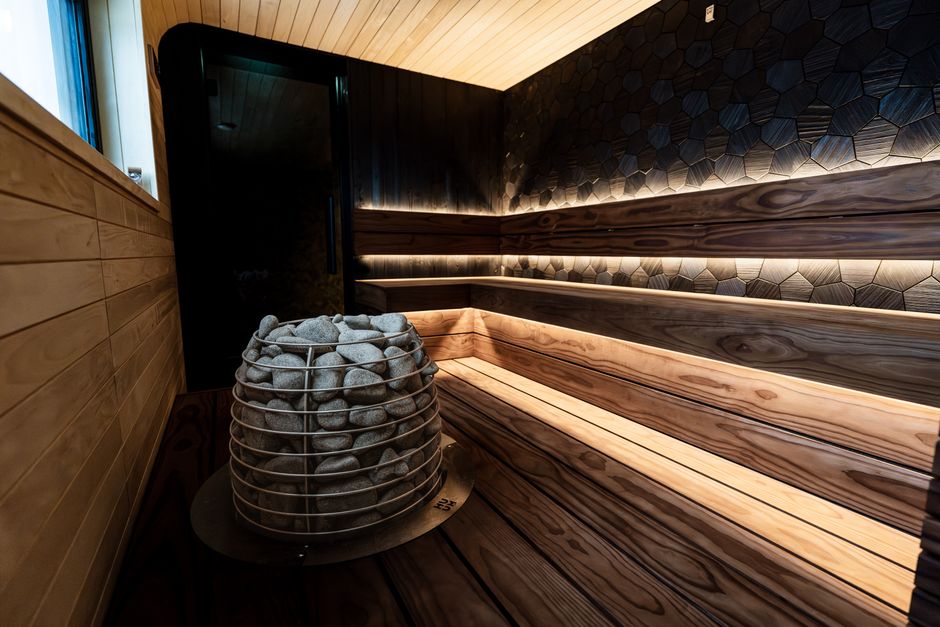
The cubic footage rule applies whether you're buying an electric heater or wood-burning stove. The difference is implementation, not math. Electric heaters are more precise; wood stoves give you that traditional experience. Both need to match your space.
Most home saunas use electric heaters because they're easier to install, safer indoors, and don't require ventilation or chimney work.
Installation and Electrical Capacity Matter Too
Once you've sized your heater, you need to confirm your home's electrical panel can handle it. A 6.0 kW sauna heater needs dedicated wiring and a 240-volt circuit. You can't just plug a high-powered sauna heater into a standard outlet.
Budget for an electrician visit ($200-400) to assess whether your home can support your chosen heater size. This isn't optional—it's a safety and performance requirement.
As an Authorized Retailer, Prime Regeneration offers premium sauna heaters from trusted brands including Harvia, HUUM, and Saunum. Our team can help you compare heater options, controls, and accessories to select the right system for your sauna size, electrical capacity, and long-term wellness goals.
When you're ready to purchase and install, Prime Regeneration provides detailed electrical specifications and installation guidance for every heater they carry, so you and your electrician are working from the same playbook.
Common Mistakes to Avoid
Mistake #1: Forgetting to Measure Glass Area
Glass conducts heat away. Measure your door and window dimensions separately; some sizing tools ask for this explicitly.
Mistake #2: Assuming Your Sauna Dimensions Online
Just because a sauna kit says "4x6" doesn't mean it is—some manufacturers measure differently. Measure your actual interior space.
Mistake #3: Ignoring Insulation Quality
A sauna with R-value insulation of 3 needs different wattage than one with R-value of 8. Know your build before you buy the heater.
Mistake #4: Buying a Heater Before Confirming Electrical Capacity
You can't return a 6.0 kW heater if your electrical panel maxes out at 100 amps total. Check first, buy second.
Where to Find Sizing Resources and Expert Help
Most sauna manufacturers publish sizing charts on their websites. Online calculators are everywhere, but quality varies. The most reliable approach is to work with an authorized dealer who understands your specific sauna model.
As an Authorized Retailer, Prime Regeneration helps homeowners compare premium sauna heaters from trusted brands including Harvia, HUUM, and Saunum. Our team can help you select the right heater size, controls, and accessories based on your sauna dimensions, electrical capacity, and long-term wellness goals. If you're still deciding which type of sauna is right for your home, our Sauna Buying Guide can help you compare traditional, infrared, indoor, and outdoor sauna options before making your investment.
Related: Hot Cold Contrast Therapy: The Ultimate Home Recovery Guide
Related: Best Outdoor Barrel Sauna Backyard Setup Guide
What if my sauna dimensions don't match standard sizes?
No problem. The cubic footage formula works for any shape or size. Measure your space, do the math (or use an online tool), and you'll get an accurate heater recommendation. Odd dimensions actually aren't rare in custom home saunas—the formula handles them perfectly.
Can I upgrade my heater later if I start too small?
Yes, but it's a hassle. You'll need new electrical wiring, possibly a new circuit breaker slot, and removal of the old heater. Start with the right size now and you avoid that expense and downtime later.
Do infrared saunas use the same sizing formula?
The cubic footage rule still applies, but infrared heaters are often lower wattage because they heat your body directly rather than the air. A 4x6 infrared sauna might need only 2.5-3.0 kW instead of 4.5 kW. Check the manufacturer's specs—they differ significantly from traditional sauna heaters.
What's the average cost difference between heater sizes?
A 3.0 kW heater costs roughly $400-700. A 6.0 kW heater runs $800-1,500, depending on brand and features. The difference is real, but under sizing and dealing with poor performance costs more in frustration and eventual replacement. Buy the right size.