

Luxury Home Wellness Room Planning Guide: Space, Utilities & Installation
In this article
- Planning a Luxury Home Wellness Room Starts Before You Buy
- Creating a luxury home wellness room involves more than selecting attractive equipment. Saunas, steam shower systems, cold plunges, and red light therapy devices can have very different space, electrical, plumbing, ventilation, delivery, and installation requirements.Planning these details before ordering can help prevent equipment conflicts, installation delays, unexpected construction expenses, and inadequate service access.Prime Regeneration is an online retailer specializing in premium home wellness equipment, including indoor and outdoor saunas, sauna heaters, steam shower systems, cold plunges, and red light therapy devices. This guide explains the practical details homeowners should review with their contractors and licensed professionals before purchasing equipment.Looking for design inspiration? Read Home Recovery Room Ideas: Design Your Wellness Space.
- 1. Define the Purpose of the Wellness Room
- 2. Measure the Room and Equipment Footprints
- 3. Confirm Electrical Requirements
- 4. Plan Plumbing and Water Supply
- 5. Address Drainage, Flooring and Moisture
- 6. Review Ventilation and Heat Management
- 7. Consider Indoor and Outdoor Conditions
- 8. Coordinate Equipment Before Construction Begins
- 9. Build a Complete Project Budget
- 10. Plan for Maintenance and Service Access
- How Prime Regeneration Can Help
- Luxury Home Wellness Room Planning Checklist
- Frequently Asked Questions
Planning a Luxury Home Wellness Room Starts Before You Buy
Creating a luxury home wellness room involves more than selecting attractive equipment. Saunas, steam shower systems, cold plunges, and red light therapy devices can have very different space, electrical, plumbing, ventilation, delivery, and installation requirements.
Planning these details before ordering can help prevent equipment conflicts, installation delays, unexpected construction expenses, and inadequate service access.
Prime Regeneration is an online retailer specializing in premium home wellness equipment, including indoor and outdoor saunas, sauna heaters, steam shower systems, cold plunges, and red light therapy devices. This guide explains the practical details homeowners should review with their contractors and licensed professionals before purchasing equipment.
Looking for design inspiration? Read Home Recovery Room Ideas: Design Your Wellness Space.
1. Define the Purpose of the Wellness Room
Begin by deciding how you realistically plan to use the space. A room designed primarily for quiet relaxation may need different equipment and infrastructure than one intended for hot-and-cold routines or a complete bathroom renovation.
Common wellness room configurations include:
- An indoor or outdoor sauna with a nearby relaxation area
- A sauna and cold plunge for a hot-and-cold wellness routine
- A steam shower incorporated into a primary bathroom
- An infrared sauna paired with a red light therapy device
- A red light therapy area with space for stretching or quiet relaxation
- A larger room combining several compatible wellness categories
Start with one or two priority features. Additional products can be added only when the available space, utilities, budget, and intended routine support them.
2. Measure the Room and Equipment Footprints
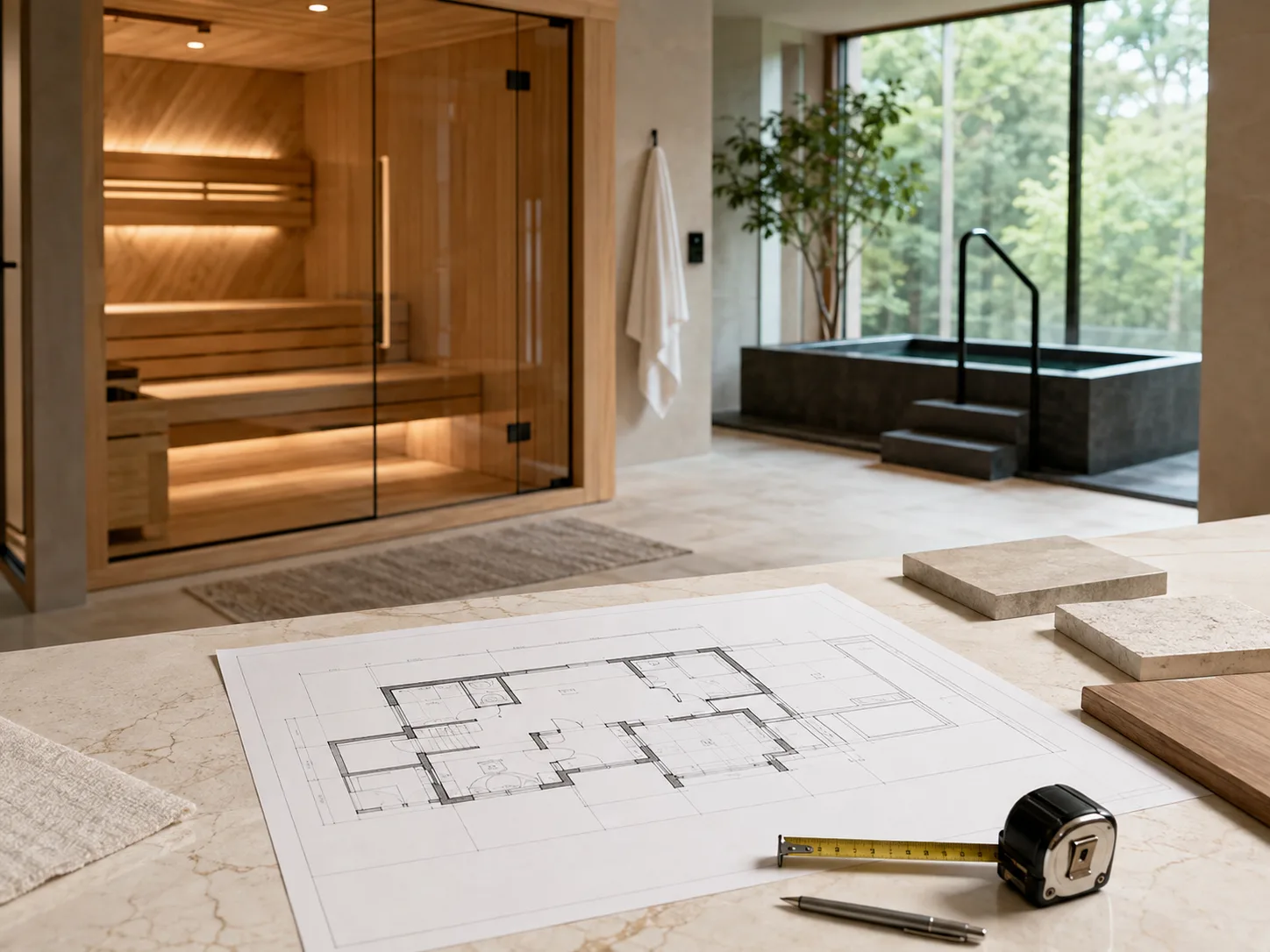
Do not rely solely on a product’s exterior dimensions. A wellness room also needs sufficient space for entry, safe movement, assembly, cleaning, servicing, ventilation, and any manufacturer-required clearances.
Before selecting equipment, document:
- Room length, width, and ceiling height
- Doorway, hallway, stairway, and elevator dimensions
- Window and door locations
- Existing outlets and electrical panels
- Water-supply and drainage locations
- Floor construction and load considerations
- Ventilation and moisture-control options
- Space needed to open doors, covers, or access panels
- Access for future service and component replacement
Use the specifications for the exact model and variation you intend to purchase. Dimensions and installation requirements can differ within the same product line.
Plan the Route Into the Room
Large saunas, cold plunges, steam generators, and related equipment may arrive in heavy cartons, on pallets, or by freight delivery. Confirm that the equipment or its individual components can move through every doorway, hallway, gate, stairway, and turn between the delivery point and its final location.
Freight delivery is generally curbside unless another service is specifically included. Moving the equipment from the curb, unpacking it, assembling it, and placing it in the room may require additional labor or equipment.
3. Confirm Electrical Requirements
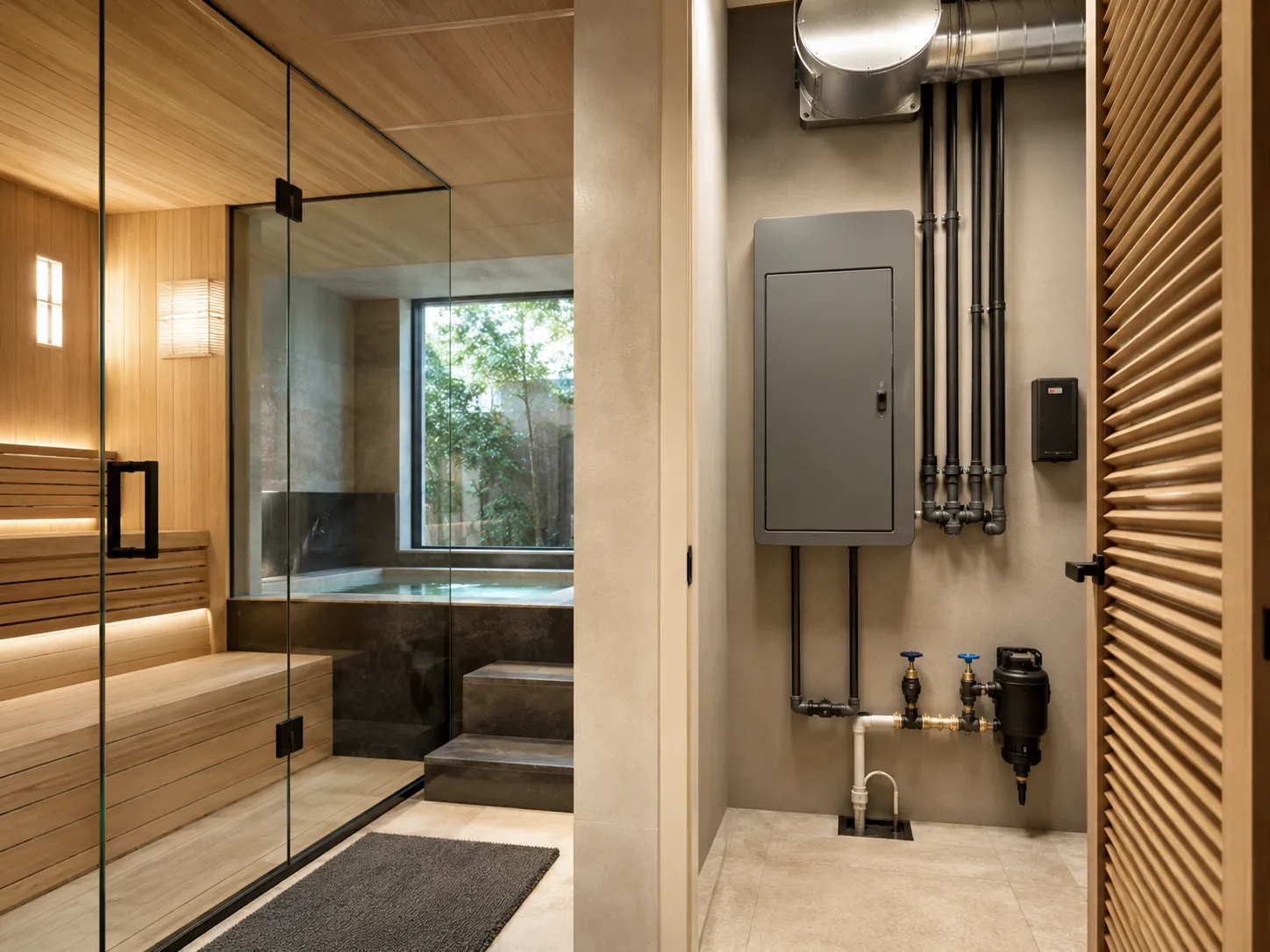
Home wellness products do not share one universal electrical requirement. Some compact infrared saunas and wellness devices may operate on 120V power, while traditional sauna heaters, larger infrared saunas, steam generators, cold plunge chillers, and other premium equipment may require 240V service, a dedicated circuit, or hardwiring.
Before ordering, have a qualified electrician review:
- Required voltage and phase
- Amperage and breaker size
- Dedicated-circuit requirements
- Plug type or hardwiring requirements
- Electrical-panel capacity
- Required disconnects
- Indoor or outdoor outlet suitability
- Ground-fault protection requirements
- Local electrical codes and permit requirements
Never assume that an available outlet is compatible based only on its location. Use the electrical specifications and installation manual for the exact product being considered.
4. Plan Plumbing and Water Supply
Plumbing requirements depend on the equipment selected. A self-contained sauna may not require a water connection, while a steam generator needs a water supply and other installation provisions.
Cold plunges also vary considerably. Some use integrated chillers and filtration systems, while others may require separate plumbing, drainage, or water-treatment planning.
Discuss the following with a qualified plumbing professional:
- Water-supply location and connection requirements
- Drainage and water-removal options
- Steam-generator location
- Water quality and filtration
- Shutoff-valve access
- Chiller and filtration connections
- Condensation management
- Winterization for applicable outdoor equipment
- Local plumbing and building codes
A nearby bathroom, laundry room, garage, or mechanical space may provide convenient access to utilities, but existing plumbing does not automatically mean the equipment can be installed without modifications.
5. Address Drainage, Flooring and Moisture
Any room containing a steam shower, cold plunge, shower, or other water-related equipment needs careful moisture planning. Splashes, condensation, cleaning water, and equipment servicing can all affect the surrounding surfaces.
Depending on the installation, planning may include:
- Water-resistant or waterproof flooring
- Floor drains or other approved drainage
- Slip-resistant walking surfaces
- Waterproofing beneath finished materials
- Moisture-resistant wall and ceiling materials
- Protection for nearby cabinetry and furnishings
- Adequate space for cleaning around equipment
- Leak detection or water-containment measures
Steam shower enclosures require materials and construction methods appropriate for a steam environment. Work with qualified professionals familiar with steam-shower waterproofing and the requirements of the selected system.
6. Review Ventilation and Heat Management
Ventilation needs depend on the sauna, steam system, cold plunge, and room configuration. Improper ventilation or moisture management can affect comfort, equipment performance, and surrounding building materials.
Review:
- Manufacturer ventilation instructions
- Room air circulation
- Heat and humidity management
- Exhaust requirements for adjacent spaces
- Condensation control
- Clearance from heat-sensitive materials
- Outdoor weather exposure
- Access for routine maintenance
Do not apply general sauna or bathroom ventilation advice to every product. Follow the documentation supplied by the specific manufacturer and coordinate it with applicable local requirements.
7. Consider Indoor and Outdoor Conditions
Outdoor equipment must be specifically designed or approved for its intended location. An indoor sauna should not be placed outside simply because it fits the available space.
For outdoor wellness areas, consider:
- Weather exposure and manufacturer placement requirements
- Foundation or prepared surface
- Drainage around the installation
- Wind, rain, snow, sun, and temperature extremes
- Freeze protection and winterization
- Outdoor-rated electrical connections
- Equipment-cover requirements
- Access for freight delivery and assembly
- Local setback, permitting, and homeowners association requirements
The prepared surface must be appropriate for the equipment’s size, weight, and installation instructions. Confirm site requirements before delivery.
8. Coordinate Equipment Before Construction Begins
If the wellness room is part of a renovation or new construction project, select the major equipment early enough for the contractor to work from actual specifications.
Your contractor may need the following information:
- Final product model and variation
- Exterior and assembled dimensions
- Product weight
- Required clearances
- Voltage, amperage, and connection type
- Water and drainage requirements
- Ventilation instructions
- Installation and assembly manuals
- Service-access requirements
- Freight dimensions and delivery method
Avoid designing the entire room around estimated dimensions. Product specifications can change between models, sizes, heaters, controls, and optional accessories.
9. Build a Complete Project Budget
The equipment purchase price is only one part of a luxury wellness room budget. Depending on the project, additional expenses may include:
- Freight handling and movement from the curb
- Site preparation or foundation work
- Electrical-panel or circuit upgrades
- Plumbing and drainage
- Waterproofing and ventilation
- Permits and inspections
- Assembly and professional installation
- Flooring, lighting, storage, and finish work
- Water-care supplies and replacement filters
- Routine maintenance and future servicing
Prime Regeneration can provide product pricing and available shipping information. Construction and installation costs should be estimated by qualified local professionals familiar with the property and applicable requirements.
10. Plan for Maintenance and Service Access
A finished wellness room should allow equipment to be cleaned, drained, inspected, and serviced without dismantling surrounding construction.
Consider access to:
- Sauna heaters and controls
- Steam generators and service panels
- Cold plunge chillers, pumps, and filters
- Water shutoff valves
- Electrical disconnects
- Drain and cleaning points
- Red light device controls and power connections
Review recommended maintenance before purchasing. Filters, water-care supplies, sauna stones, heating components, and other consumable or serviceable parts may require periodic attention.
How Prime Regeneration Can Help
Prime Regeneration offers premium equipment for indoor and outdoor home wellness spaces. Customers can compare product dimensions, equipment features, available configurations, manufacturer specifications, warranty information, and published utility requirements before ordering.
Prime Regeneration does not replace architects, engineers, electricians, plumbers, contractors, or local permitting authorities. Final site evaluation, room design, code compliance, utility planning, assembly, and installation should be handled by appropriately qualified professionals.
Manufacturer warranty coverage, authorized-retailer status, shipping terms, installation requirements, and return eligibility vary by brand and product. Review the individual product page and applicable policies before purchasing.
Explore Prime Regeneration’s collections:
- Saunas
- Sauna heaters
- Steam shower systems
- Cold plunges and contrast therapy equipment
- Red light therapy devices
Luxury Home Wellness Room Planning Checklist
Before placing an order, confirm:
- The exact product model and variation
- Product and freight dimensions
- Delivery access
- Available room dimensions
- Required clearances and service access
- Floor and foundation requirements
- Electrical specifications
- Plumbing and drainage requirements
- Ventilation and moisture management
- Indoor or outdoor placement approval
- Contractor and installer responsibilities
- Local permits and code requirements
- Warranty and return terms
- Ongoing maintenance needs
A luxury wellness room does not need to contain every available modality. The strongest design is one that fits the property, supports the homeowner’s preferred routine, and is planned around the actual requirements of the selected equipment.
Frequently Asked Questions
Should I select wellness equipment before designing the room?
Select the major equipment early enough for the room to be planned around its actual dimensions and utility requirements. Final design and construction decisions should be reviewed by the appropriate qualified professionals.
Does every home sauna require 240V power?
No. Electrical requirements vary by sauna type, size, heater, and model. Some compact infrared saunas may use 120V power, while many traditional sauna heaters and larger units require 240V service or hardwiring. Always verify the exact product specifications.
Does a cold plunge need plumbing?
Not every cold plunge requires permanent plumbing, but every system needs a plan for filling, draining, cleaning, water care, and managing spills or condensation. Models with chillers, pumps, and filtration systems may have additional connection and servicing requirements.
What does a steam shower system require?
Requirements vary by system and room design. A residential steam installation generally involves a properly sized steam generator, electrical service, water supply, drainage provisions, a suitable generator location, and a fully enclosed steam-rated shower. Follow the manufacturer’s documentation and work with qualified professionals.
Can indoor wellness equipment be installed outside?
Only install equipment in locations permitted by the manufacturer. Indoor products may not be designed for rain, direct sunlight, freezing temperatures, or other outdoor conditions.
Can Prime Regeneration design or install my wellness room?
Prime Regeneration sells and helps customers compare home wellness equipment. Professional room design, utility planning, permitting, site preparation, assembly, and installation should be completed by qualified local professionals.


