Green Light Therapy: What It Is & How It Works
In this article
- What Is Green Light Therapy?
- How Green Light Therapy Works
- What Is Green Light Therapy Being Studied For?
- Green Light Therapy and Migraine Research
- Green Light Therapy and Skin Appearance
- How Green Light Compares to Red Light Therapy
- Using Green Light Therapy Devices
- Using Green Light Therapy Devices
- Important Safety Information
- Frequently Asked Questions
What Is Green Light Therapy?
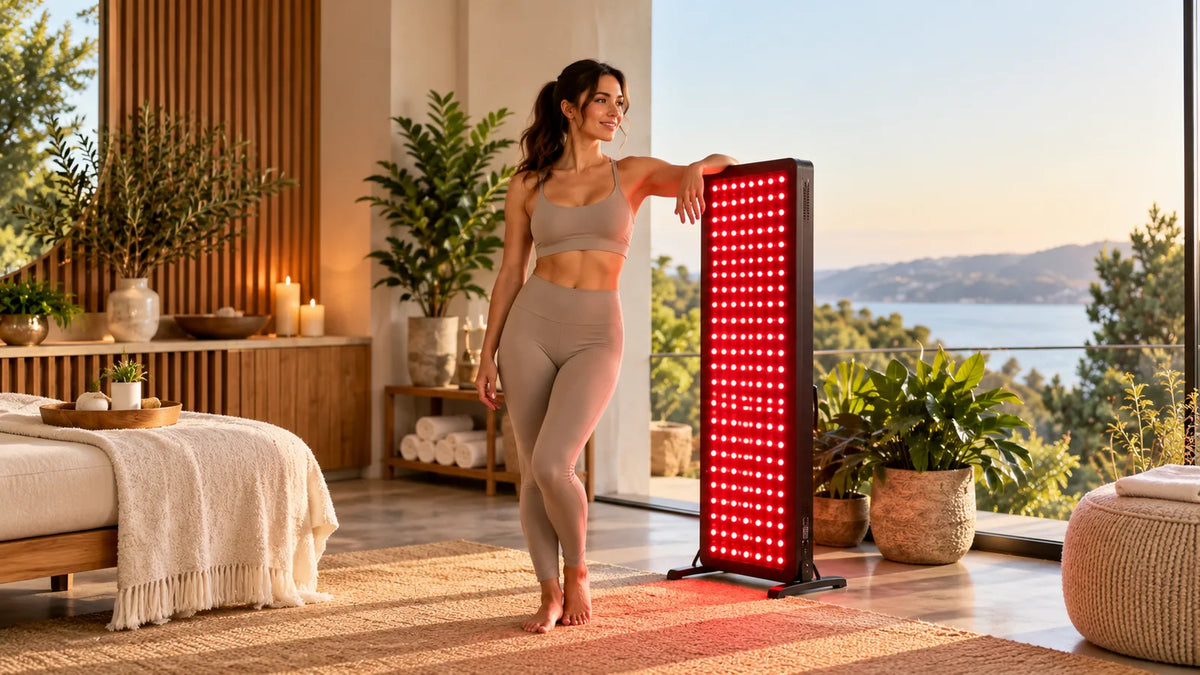
GGreen light therapy uses wavelengths within the visible green portion of the light spectrum. Depending on the device and research protocol, green light is commonly studied in the approximate 500–570 nanometer range.
Unlike red and near-infrared light therapy, which are often discussed in relation to photobiomodulation and deeper tissue exposure, green light has been studied for different applications, including how the visual and nervous systems respond to specific wavelengths of light.
Research into green light therapy is still developing. Some of the most discussed studies involve migraine and light sensitivity, but study size, light intensity, wavelength, exposure time, and device design vary considerably.
How Green Light Therapy Works
Green light interacts with the body differently from red and near-infrared light because wavelength affects how light is absorbed and how deeply it penetrates tissue.
Some green-light research focuses on the visual system rather than direct tissue exposure. Researchers studying migraine, for example, have examined how different wavelengths influence retinal pathways, light sensitivity, and headache perception.
Other laboratory research has explored potential biological responses to green wavelengths, but mechanisms can vary depending on the device, wavelength, intensity, and area exposed.
For that reason, findings from one green-light protocol should not automatically be applied to every lamp, mask, panel, or other consumer device.
What Is Green Light Therapy Being Studied For?
Green light therapy has been studied in several areas, but the amount and quality of evidence differ considerably by application.
The most prominent human research has examined green light exposure in people with migraine and light sensitivity. Smaller studies have reported changes in headache frequency, discomfort, or quality-of-life measures, but researchers have also noted important limitations, including small sample sizes and difficulty blinding participants to the color of light. PubMed
Green light has also been discussed in connection with pain perception and skin appearance, although evidence for these uses should be evaluated separately rather than assuming that results from migraine studies apply to other conditions.
Green Light Therapy and Migraine Research
Migraine is currently one of the better-known areas of green-light research.
A small preliminary clinical study involving people with episodic and chronic migraine examined daily exposure to green LED light and reported reductions in headache days and improvements in several quality-of-life measures. However, the study included only 29 participants and the researchers specifically called for larger clinical trials. PubMed
A later real-world study involving users of a narrow-band green-light lamp also reported improvements in headache and light sensitivity for some participants. However, the study was open-label and lacked a blinded contemporaneous control group, which limits how confidently the findings can be interpreted. PubMed
More recent research continues to explore how specific wavelengths influence migraine-associated light sensitivity, but green light should not be presented as a proven replacement for migraine treatment prescribed by a healthcare professional.
Green Light Therapy and Skin Appearance
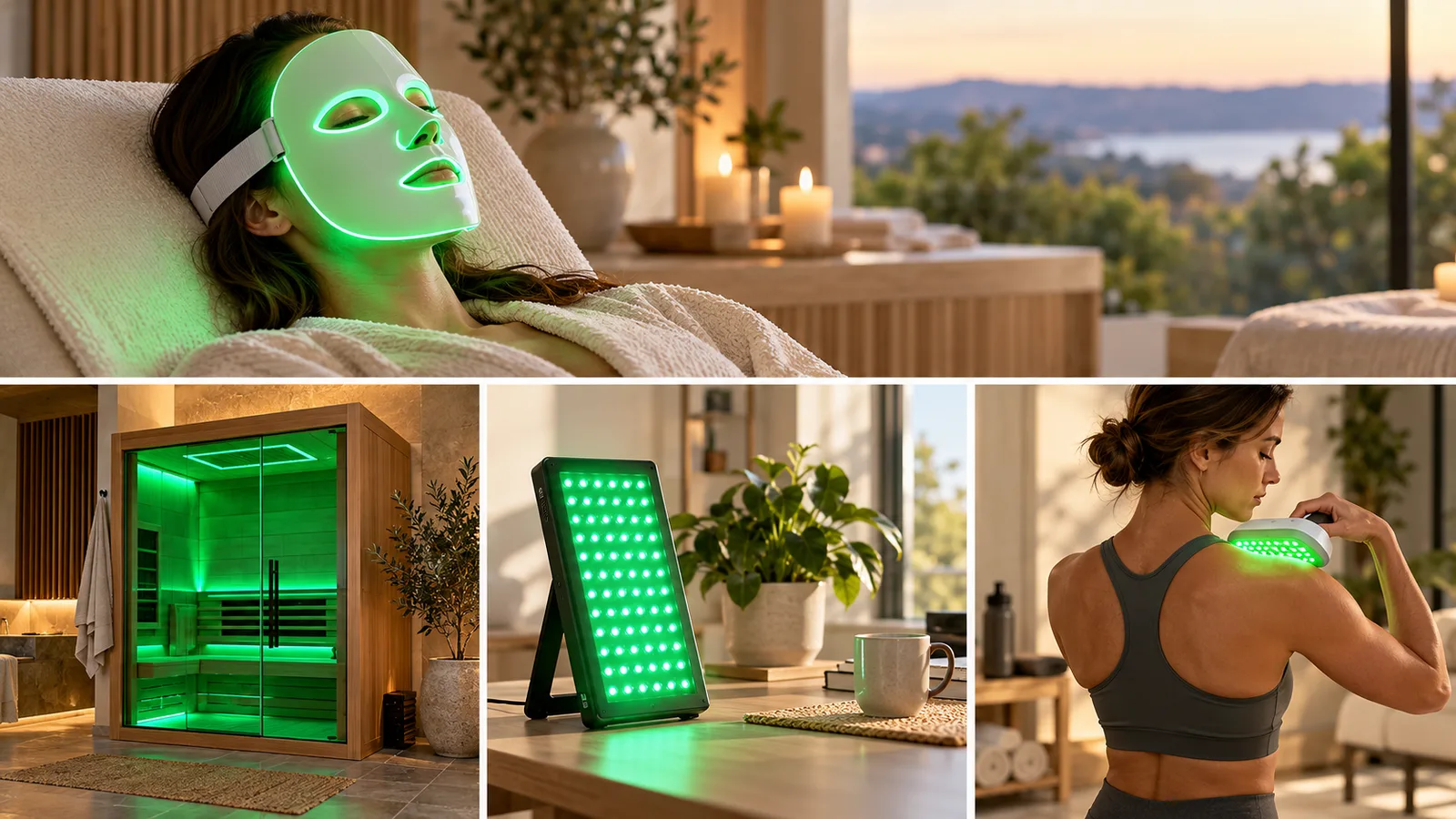
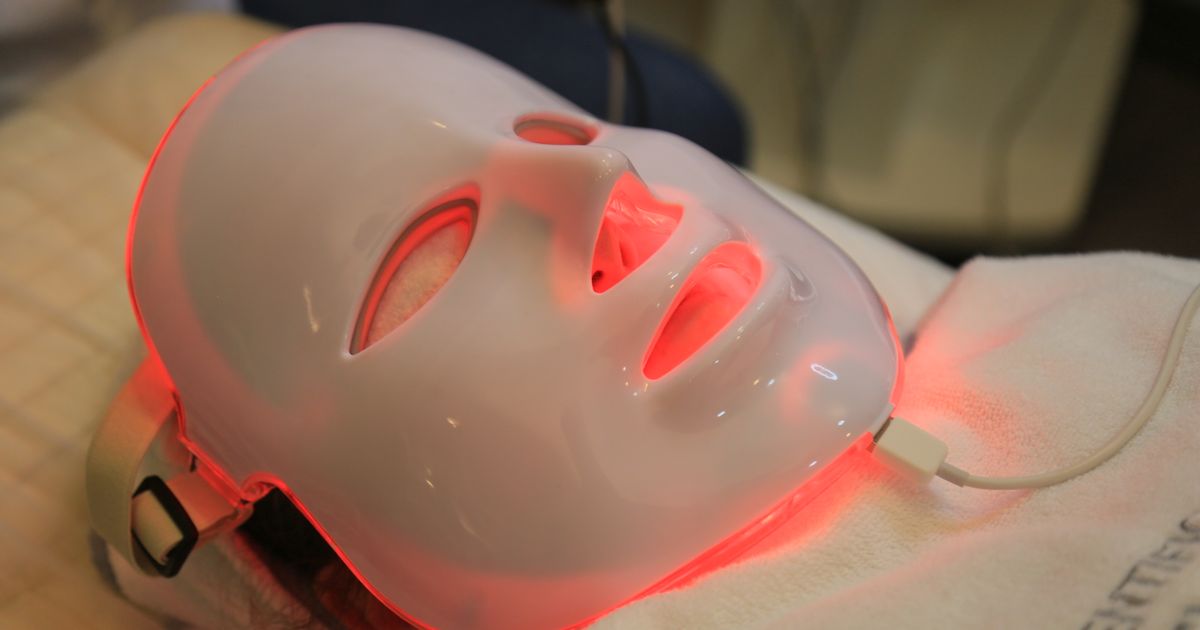
Green wavelengths are also used in some cosmetic light-therapy devices and masks. However, the research base for green light and cosmetic skin outcomes is not as established or standardized as many consumer marketing claims suggest.
Device wavelength, intensity, exposure time, and intended use can vary significantly. If you are considering a green-light device for cosmetic use, review the manufacturer's specifications and intended-use information rather than assuming all green-light products produce the same effects.
How Green Light Compares to Red Light Therapy
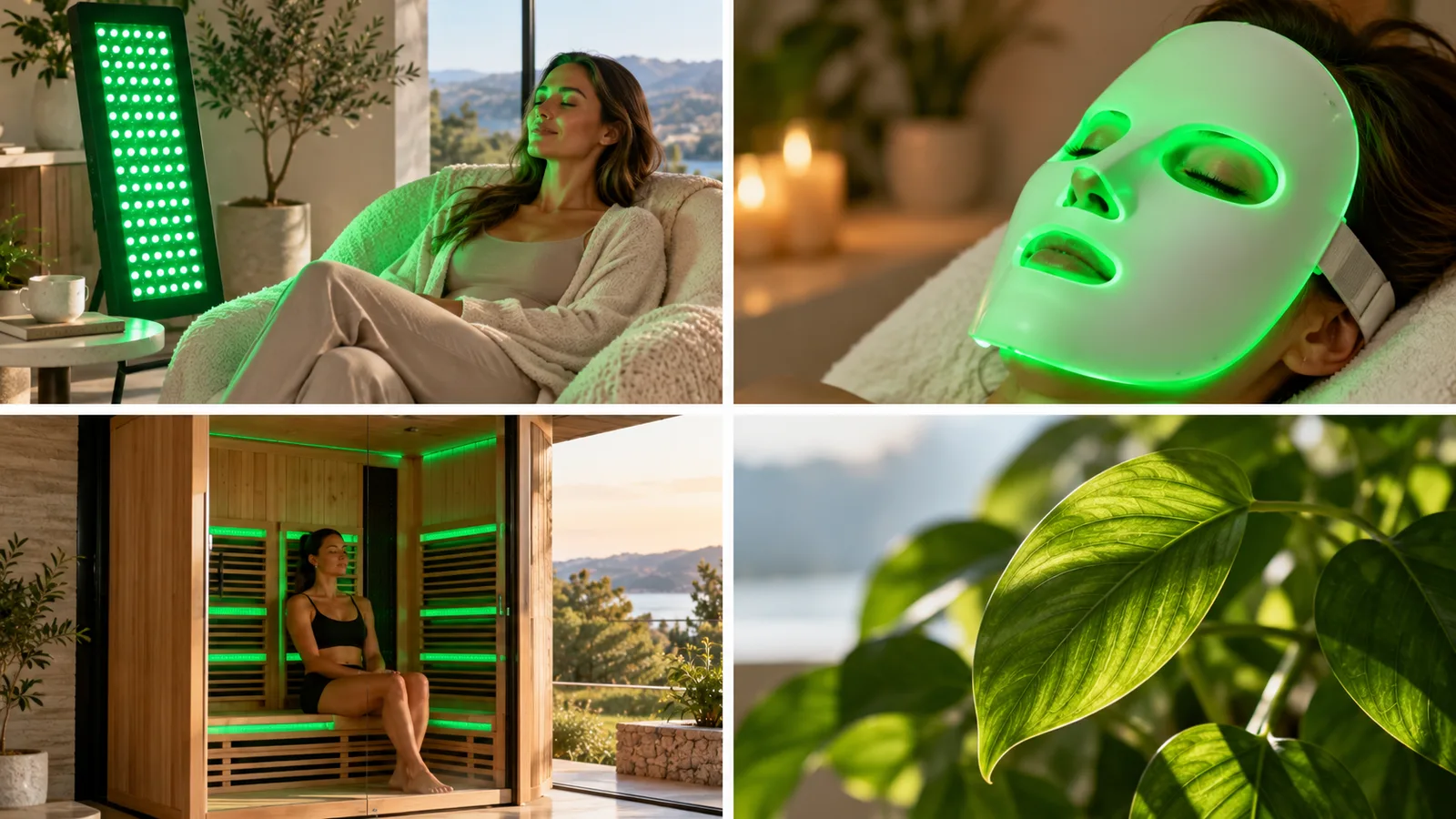
Green and red light occupy different parts of the visible light spectrum and should not be treated as interchangeable technologies.
To better understand how red and near-infrared wavelengths differ in home-use devices, see our Full Body Red Light Therapy: Complete Home Guide.
Green light is generally shorter in wavelength than red light and near-infrared light. Because wavelength affects absorption and tissue penetration, different colors of light may interact with biological tissues and the visual system differently.
Green-light research has received particular attention in relation to visual sensitivity and migraine, while red and near-infrared photobiomodulation research covers a broader range of cellular and tissue applications.
The important point is that evidence for one wavelength should not automatically be applied to another. A study involving narrow-band green light does not establish that a red-light panel produces the same effect, and vice versa.
For a deeper look at red and near-infrared wavelengths, see our Does Red Light Therapy Work? guide.
Using Green Light Therapy Devices
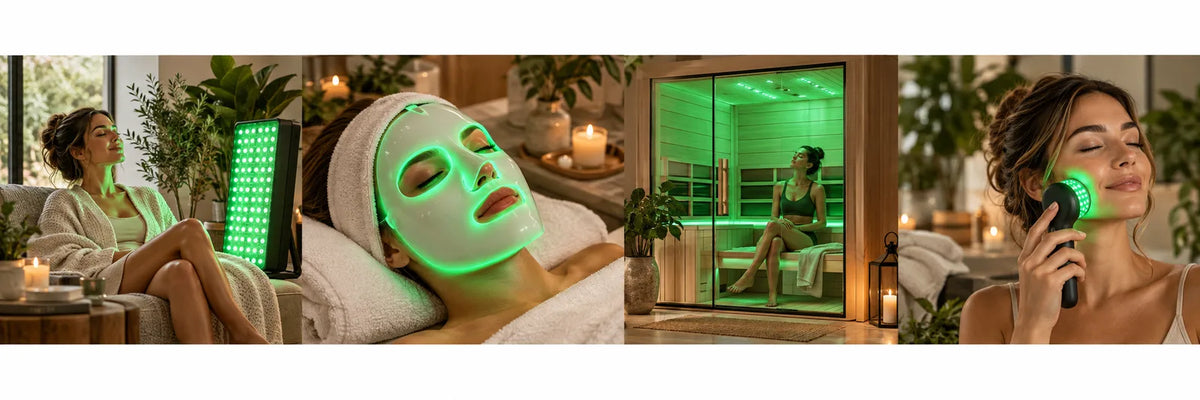
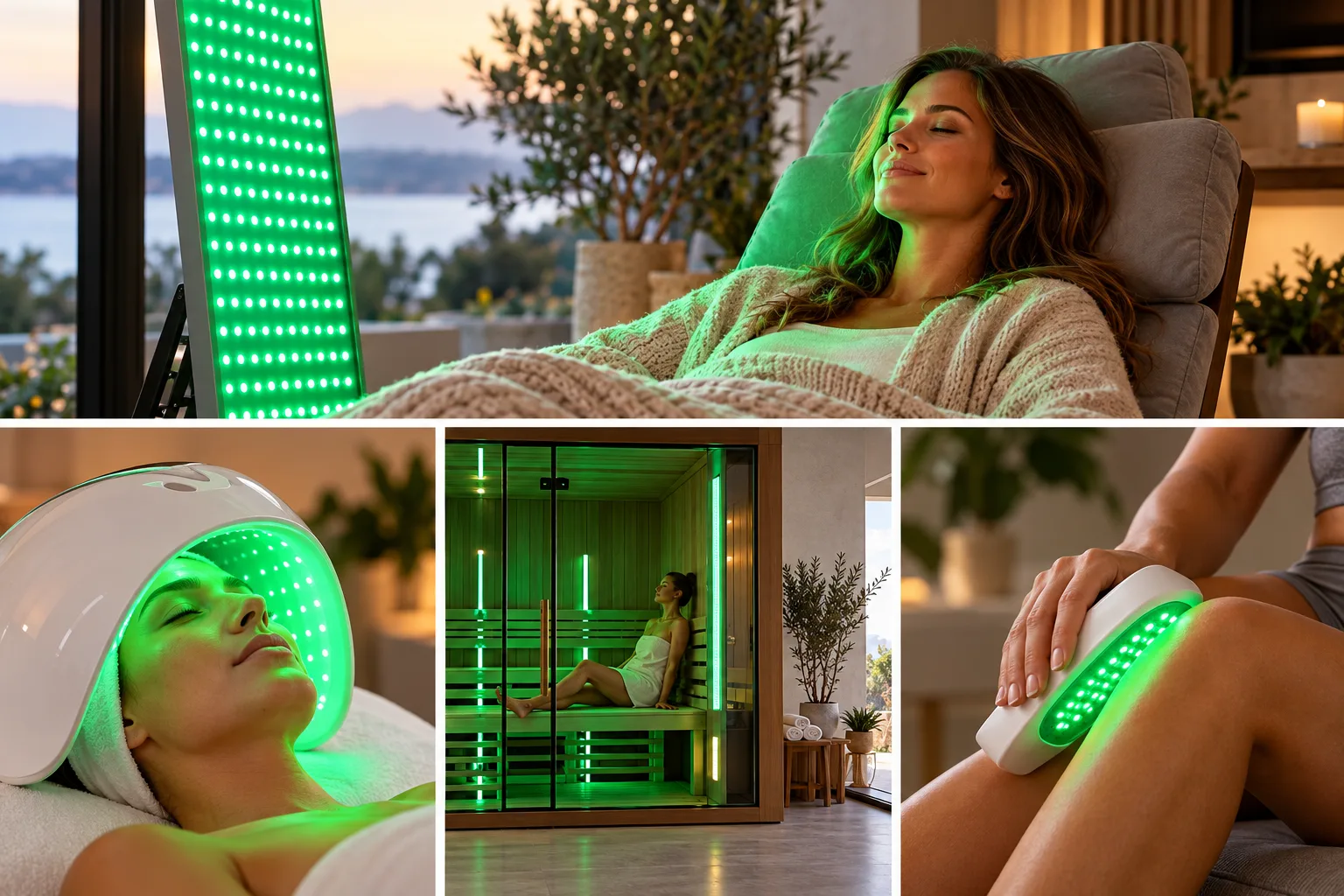
Green light therapy devices come in many formats: panels, lamps, masks, and targeted wraps. Your choice depends on what area you want to use the device on and your lifestyle.
Look for devices that specify their wavelength range (520-560nm for green light). Reputable manufacturers provide detailed specifications. When shopping for light therapy equipment, Prime Regeneration offers information on wellness devices with published specifications and warranty details.
Consider how you'll use it. Will you use it daily, during morning routines, or on specific areas? Your answers shape which device format makes sense for your situation.
Using Green Light Therapy Devices
How a green-light device should be used depends entirely on the product's intended use, wavelength, intensity, and design.
A narrow-band green lamp used for ambient exposure is very different from a facial mask, targeted light device, or multi-wavelength wellness product.
Follow the manufacturer's instructions for distance, exposure time, eye-safety requirements, and frequency. Do not copy treatment schedules from clinical studies unless the device manufacturer specifically recommends the same protocol.
If you are comparing different types of light-based wellness equipment for home use, our Red Light Therapy at Home guide covers device placement, setup, and safety considerations.
Important Safety Information
Light-based devices vary in design, intensity, intended use, and regulatory status. Always follow the safety information supplied with your specific device.
Because light exposure may affect people differently, individuals with eye conditions, light sensitivity, photosensitive conditions, or medications that increase sensitivity to light should speak with a qualified healthcare professional before beginning a new light-based therapy.
If you are considering green light because of migraines, chronic pain, or another medical condition, discuss it with your healthcare provider rather than replacing prescribed treatment with a consumer light device.
Frequently Asked Questions
Does green light therapy help migraines?
Green light has been studied in people with migraine and light sensitivity, and some small studies have reported improvements in measures such as headache frequency, discomfort, or quality of life. However, the research is still developing, and study sizes have generally been limited. Green light therapy should not be viewed as a replacement for medical care or prescribed migraine treatment.
Green light has been studied in people with migraine and light sensitivity, and some small studies have reported improvements in measures such as headache frequency, discomfort, or quality of life. However, the research is still developing, and study sizes have generally been limited. Green light therapy should not be viewed as a replacement for medical care or prescribed migraine treatment.
Is green light therapy the same as red light therapy?
No. Green and red light use different wavelengths and are studied for different applications. Green light is generally in the visible range around 520–560nm, while red light is commonly around 600–700nm, with near-infrared wavelengths extending beyond that. Because wavelength affects how light interacts with the body, research findings for one color of light should not automatically be applied to another.
No. Green and red light use different wavelengths and are studied for different applications. Green light is generally in the visible range around 520–560nm, while red light is commonly around 600–700nm, with near-infrared wavelengths extending beyond that. Because wavelength affects how light interacts with the body, research findings for one color of light should not automatically be applied to another.
What wavelength is used for green light therapy?
Green light therapy devices commonly use wavelengths within the visible green portion of the spectrum, often around 520–560nm. However, exact wavelength, intensity, exposure time, and device design can vary. Always check the specifications and manufacturer instructions for the device you are considering.
Green light therapy devices commonly use wavelengths within the visible green portion of the spectrum, often around 520–560nm. However, exact wavelength, intensity, exposure time, and device design can vary. Always check the specifications and manufacturer instructions for the device you are considering.
Can any green light bulb be used for green light therapy?
Not necessarily. Clinical studies may use narrow-band green light with specific wavelengths, intensity levels, distances, and exposure times. A standard household green bulb may not reproduce the same conditions used in research. For this reason, it is important to look at the specifications of the actual device rather than assuming that all green light sources work the same way.
Not necessarily. Clinical studies may use narrow-band green light with specific wavelengths, intensity levels, distances, and exposure times. A standard household green bulb may not reproduce the same conditions used in research. For this reason, it is important to look at the specifications of the actual device rather than assuming that all green light sources work the same way.
Are there any precautions with green light therapy?
Yes. Follow the safety instructions supplied with your specific device, including any guidance about eye exposure, distance, and session length. If you have an eye condition, a photosensitive condition, significant light sensitivity, or take medications that may increase sensitivity to light, speak with a qualified healthcare professional before using a light-based device.
Yes. Follow the safety instructions supplied with your specific device, including any guidance about eye exposure, distance, and session length. If you have an eye condition, a photosensitive condition, significant light sensitivity, or take medications that may increase sensitivity to light, speak with a qualified healthcare professional before using a light-based device.
Can green light therapy be used with other treatments?
That depends on the device and the treatment involved. If you are under medical care, taking prescription medications, or using other light-based or skin treatments, it is best to speak with your healthcare provider before adding green light therapy to your routine. Always follow the manufacturer instructions for each device you use.
That depends on the device and the treatment involved. If you are under medical care, taking prescription medications, or using other light-based or skin treatments, it is best to speak with your healthcare provider before adding green light therapy to your routine. Always follow the manufacturer instructions for each device you use.