Red Light Therapy for Weight Loss: What Does the Research Show?
Red light therapy is increasingly discussed in connection with weight management, body composition, and body-contouring goals. But can using red or near-infrared light actually help you lose weight?
Research has explored photobiomodulation and low-level light therapy in relation to changes in body circumference and body composition. However, those findings should not be confused with evidence that red light therapy causes significant or long-term weight loss.
In this guide, we'll look at what the research actually shows, how weight loss differs from localized body-contouring results, and what to consider before adding red light therapy to a broader wellness routine.

In this article
- How Red Light Therapy Works
- What Does Research Say About Red Light Therapy and Weight Loss?
- Weight Loss vs. Body Fat Reduction vs. Body Contouring
- Does Red Light Therapy Boost Metabolism?
- Can Red Light Therapy Replace Diet or Exercise?
- Home Red Light Therapy Devices vs. Research Equipment
- Important Safety Information
- The Bottom Line
How Red Light Therapy Works
Red light therapy, also known as photobiomodulation, uses specific wavelengths of red and near-infrared light. Many consumer devices use wavelengths such as 660nm red light and 850nm near-infrared light.
Researchers have studied how these wavelengths interact with cells and cellular energy processes. However, cellular activity does not automatically mean that red light therapy increases whole-body metabolism or produces meaningful weight loss. Those outcomes need to be evaluated separately through clinical research.
What Does Research Say About Red Light Therapy and Weight Loss?
Research into red light therapy and body composition is still developing, and study results depend heavily on the equipment used, treatment protocol, wavelengths, study size, treatment duration, and whether other lifestyle interventions were included.
Some studies involving low-level light therapy or photobiomodulation have reported changes in body circumference or body-composition measurements. However, a reduction in waist, hip, or thigh circumference is not the same thing as demonstrating substantial or sustained weight loss.
This distinction is important when evaluating red light therapy claims. Studies may measure different outcomes, and results from one type of device or clinical protocol should not automatically be applied to every home red light therapy product.
For a broader look at the evidence behind red and near-infrared light, read our guide, Does Red Light Therapy Work? The Honest Truth.
Weight Loss vs. Body Fat Reduction vs. Body Contouring
Weight loss, fat reduction, and body contouring are related concepts, but they are not interchangeable.
Weight loss refers to a reduction in total body weight.
Body composition describes the proportion of body fat, muscle, water, and other tissues.
Circumference reduction refers to a change in measurements around areas such as the waist, hips, or thighs.
Body contouring generally refers to changes in the shape or appearance of a targeted area.
A study showing a change in circumference does not necessarily mean participants lost a meaningful amount of body weight. This is one reason red light therapy research needs to be interpreted carefully.
If you are comparing claims or photos online, our Red Light Therapy Before and After guide explains why visible results can vary and why before-and-after images should be evaluated carefully.

Does Red Light Therapy Boost Metabolism?
Red light therapy is sometimes described online as a way to "boost metabolism," but that claim requires context.
Photobiomodulation research has examined how light interacts with cellular processes, including mitochondrial activity. However, effects at the cellular level do not automatically demonstrate that a person burns significantly more calories or experiences a meaningful increase in whole-body metabolic rate.
At this time, red light therapy should not be viewed as a proven method for increasing metabolism or producing substantial weight loss on its own.
Can Red Light Therapy Replace Diet or Exercise?
Red light therapy should not be viewed as a replacement for nutrition, physical activity, sleep, or medical weight-management care.
Some research involving photobiomodulation has examined it alongside exercise or other lifestyle interventions. When multiple interventions are used together, it can also be difficult to determine how much of an observed result is attributable to the light therapy itself.
For people interested in red light therapy, it is better viewed as a wellness technology that may be incorporated into a broader routine rather than as a standalone weight-loss solution.
Home Red Light Therapy Devices vs. Research Equipment
One of the most important considerations when reading red light therapy studies is that research equipment and home-use devices are not always equivalent.
Clinical studies may use:
Specific wavelengths and wavelength combinations
Precisely controlled treatment times
Defined energy doses and power levels
Professional or specialized equipment
Carefully scheduled treatment protocols
Consumer red light therapy devices can vary considerably in output, coverage area, wavelength combinations, and recommended treatment time.
Because of these differences, results from a clinical study using one piece of equipment should not automatically be assumed to apply to a home panel, mat, pad, or wearable device.
For a closer look at larger home-use systems, coverage, wavelengths, and setup considerations, see our Full Body Red Light Therapy: Complete Home Guide.
Important Safety Information
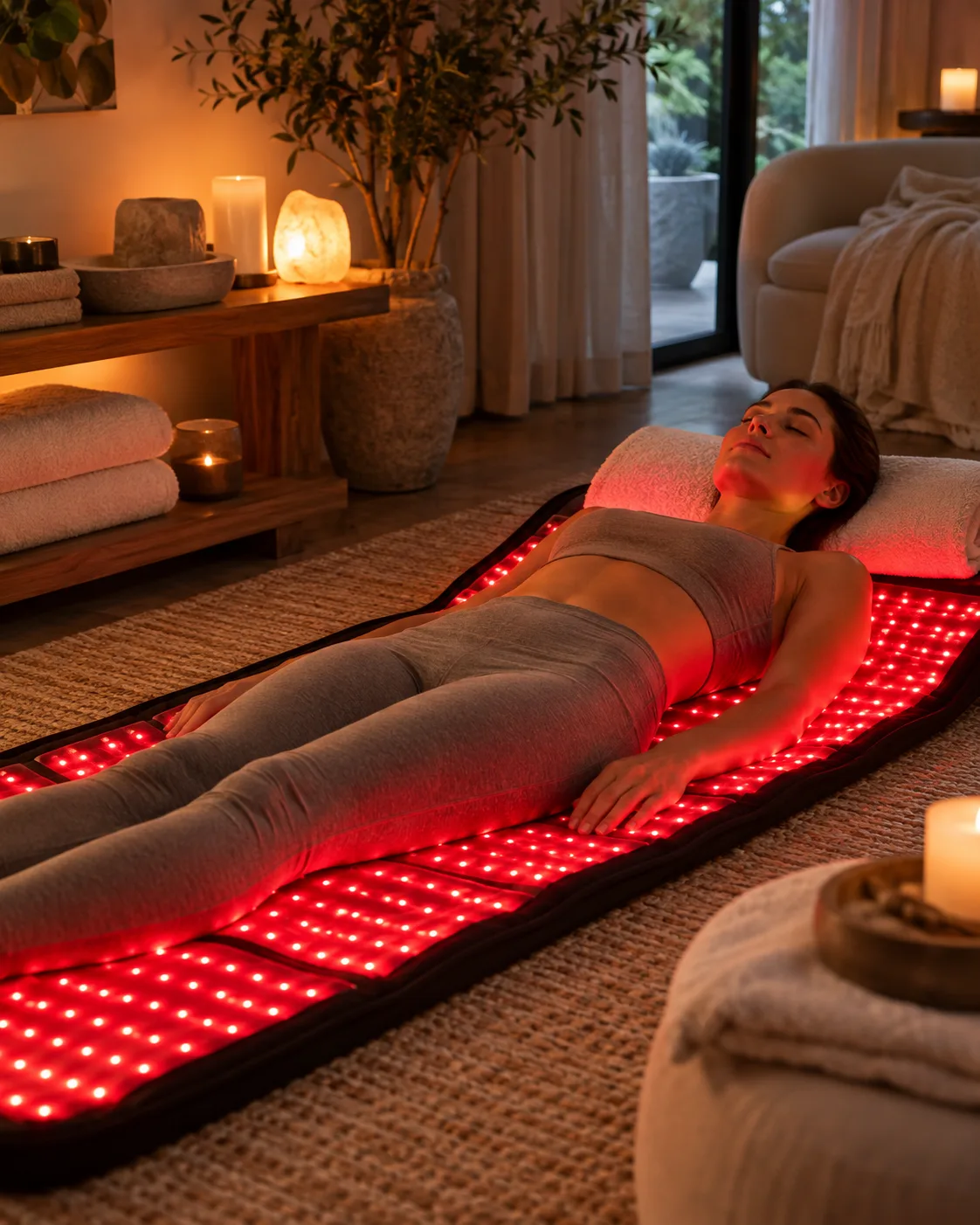
Red light therapy devices emit light energy and may generate mild heat. Always review and follow the manufacturer instructions and safety warnings provided with your specific device, including any eye-protection guidance.
If you have a light-sensitive condition, take photosensitizing medications, are pregnant, or have medical concerns, speak with a qualified healthcare professional before using a red light therapy device.
FDA status varies by device and intended use. Some light-based devices may have FDA clearance for specific uses, but that does not mean all red light therapy products are cleared or approved for weight loss. Review the manufacturer's regulatory information for the specific device you are considering.
The Bottom Line
Red light therapy has been studied in connection with body composition, circumference measurements, and body-contouring applications, but those findings should not be interpreted as proof that home red light therapy devices cause significant or sustained weight loss.
The most useful way to evaluate the research is to look closely at what a study actually measured, what type of device was used, and whether exercise, nutrition, or other interventions were part of the protocol.
If you are planning a home setup, our Red Light Therapy at Home: Setup, Placement & Safety Guide covers space planning, positioning, electrical access, and manufacturer-specific safety considerations.
If you're exploring red light therapy for general home wellness, focus on device quality, manufacturer instructions, coverage area, wavelengths, and realistic expectations rather than relying on dramatic weight-loss claims.
You can also explore red light therapy devices available for home wellness use.
Does red light therapy burn fat?
Some studies have examined low-level light therapy in relation to fat tissue, body circumference, and body composition. However, this does not establish that every red light therapy device causes meaningful fat loss or weight loss. Results depend on the device, treatment protocol, and study design.
Can red light therapy help with belly fat?
Research has explored localized body-contouring and circumference changes, including areas such as the waist. However, localized measurement changes should not be interpreted as proof of substantial overall weight loss.
Does red light therapy increase metabolism?
Research into photobiomodulation includes cellular energy processes, but that is not the same as demonstrating a meaningful increase in whole-body metabolic rate or calorie expenditure.
Can red light therapy help you lose weight without exercise?
Red light therapy should not be considered a replacement for physical activity, nutrition, or medical weight-management care. Research may include red light therapy alongside other lifestyle interventions, which makes it important to look carefully at how each study was designed.
Is red light therapy FDA approved for weight loss?
FDA status depends on the individual device and its intended use. Some light-based devices may have FDA clearance for specific applications, but consumers should not assume that all red light therapy products are cleared or approved for weight loss.