Article: Is Red Light Therapy Legit? What Research Actually Shows
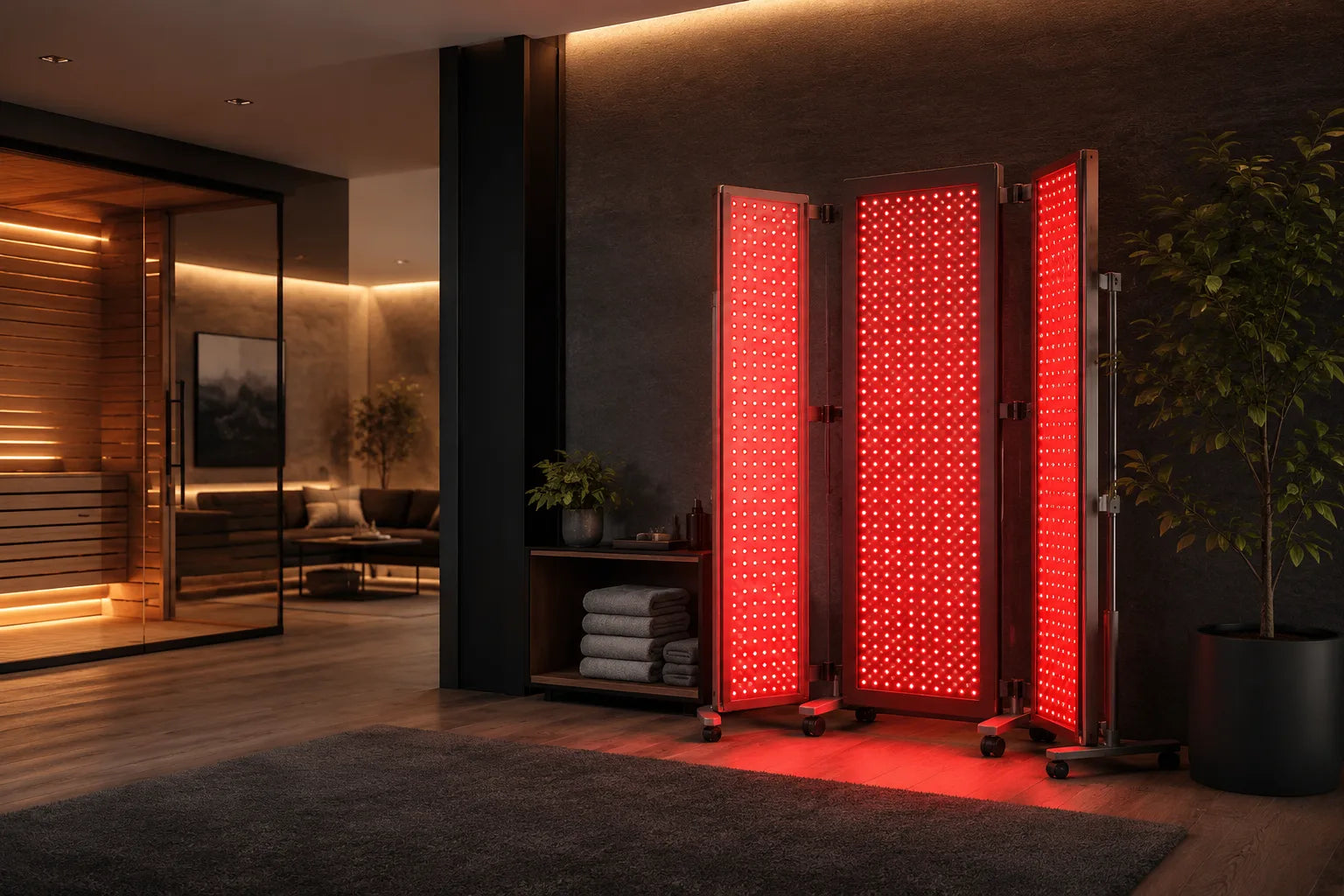
Is Red Light Therapy Legit? What Research Actually Shows
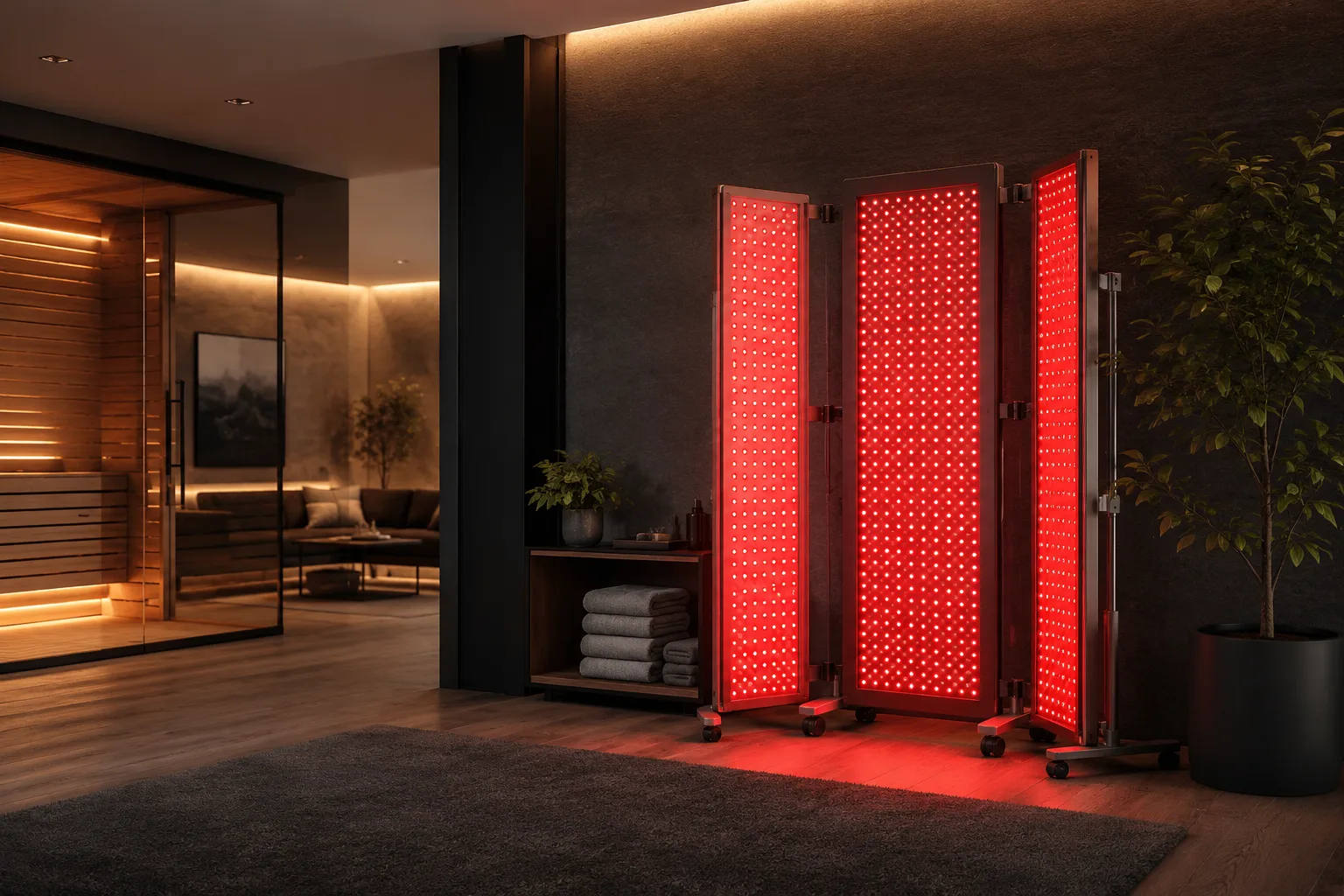
Red light therapy devices have become increasingly visible in home wellness spaces, spas, skincare routines, and professional settings. With so many masks, panels, pads, and handheld devices available, it is reasonable to ask: Is red light therapy legit, or is it simply another wellness trend?
The most accurate answer is that photobiomodulation, commonly called red light therapy, is a real and actively studied technology. However, that does not mean every device is equivalent, every marketing claim is supported, or every person will have the same experience.
Research findings depend on the specific device, wavelength, light output, exposure time, distance, intended use, and study protocol. Results from a controlled clinical study also cannot automatically be applied to every red light therapy product sold for home use.
This guide explains what red light therapy is, what current research can reasonably tell us, how FDA clearance works, and what to consider when comparing red light therapy devices for your home wellness space.
In this article
- What Is Red Light Therapy?
- Is Red Light Therapy Backed by Science?
- What the Research Does Not Establish
- How Red Light Therapy Devices Work
- Does FDA Clearance Mean Red Light Therapy Is Proven?
- What Are Realistic Expectations?
- Types of Red Light Therapy Devices for Home Use
- How to Choose a Red Light Therapy Device
- Using Red Light Therapy Devices Responsibly
- Why Shop for Red Light Therapy Devices at Prime Regeneration?
- Adding Red Light Therapy to a Home Wellness Space
- Frequently Asked Questions
- Photobiomodulation is a real field of scientific and clinical research. However, the evidence does not validate every product or marketing claim. The most reliable approach is to evaluate the exact device, its specifications, intended use, regulatory status, and manufacturer instructions.
- No. Regulatory status varies by product. Some devices have FDA clearance for a specific intended use. Others may be marketed for general wellness or cosmetic purposes. Verify claims using the exact device name and model number.
- A 510(k) clearance generally concerns substantial equivalence to an appropriate legally marketed device. Any clearance applies to the stated device and intended use.
- There is no universal schedule for every device. Follow the session duration, frequency, operating distance, and safety instructions supplied by the manufacturer of your exact product.
- No. LED count and wattage alone do not establish device quality or suitability. Wavelengths, irradiance, measurement distance, illuminated area, exposure time, controls, intended use, and product construction should all be considered.
- A general wellness device should not be used as a substitute for medical evaluation, prescribed care, sun protection, or an established skincare routine. Questions involving a medical condition or personal treatment plan should be directed to a qualified healthcare professional.
- At the same time, the science does not support treating every device as equivalent or accepting every marketing claim at face value.
- Suggested Research Sources
- U.S. Food and Drug Administration: Photobiomodulation Devices—Premarket Notification 510(k) Submissions, Draft Guidance. U.S. Food and Drug Administration: Premarket Notification 510(k). Son et al.: Effects of Photobiomodulation on Multiple Health Outcomes: An Umbrella Review of Randomized Clinical Trials. Álvarez-Martínez et al.: A Systematic Review on Whole-Body Photobiomodulation for Exercise Recovery and Performance.
What Is Red Light Therapy?
Red light therapy is a general consumer term commonly used for devices that emit visible red light, near-infrared light, or a combination of wavelengths.
In scientific and regulatory settings, the technology may be called photobiomodulation, or PBM. Devices may use light-emitting diodes, commonly known as LEDs, or other light sources to deliver non-ionizing light to a selected area.
The exact wavelengths vary by product. Many home devices use wavelengths within portions of the red and near-infrared spectrum, but the presence of a particular wavelength alone does not establish what a device will accomplish.
Other specifications can include:
These factors can differ substantially between a small facial mask, a flexible pad, a handheld device, and a large full-body panel.
Is Red Light Therapy Backed by Science?
Photobiomodulation has been evaluated in laboratory studies, clinical trials, systematic reviews, and other scientific publications. Therefore, it would be inaccurate to describe the entire technology as fake or scientifically baseless.
However, it would also be inaccurate to say that research proves every red light therapy claim.
Studies have examined different wavelengths, devices, exposure levels, target areas, populations, and intended applications. This makes it difficult to treat “red light therapy” as one standardized intervention.
Recent research reviews have found encouraging results in certain narrowly defined areas, but the certainty and consistency of the evidence vary. Researchers continue to call for larger studies, more consistent protocols, and better standardization of device parameters.
The most responsible conclusion is:
Red light therapy is a legitimate area of research, but evidence must be evaluated according to the specific device, intended use, and protocol.
A study involving one professionally administered device does not prove that a different consumer panel, mask, or pad will provide the same outcome.
What the Research Does Not Establish
Scientific interest in photobiomodulation should not be interpreted as proof of broad wellness or medical claims.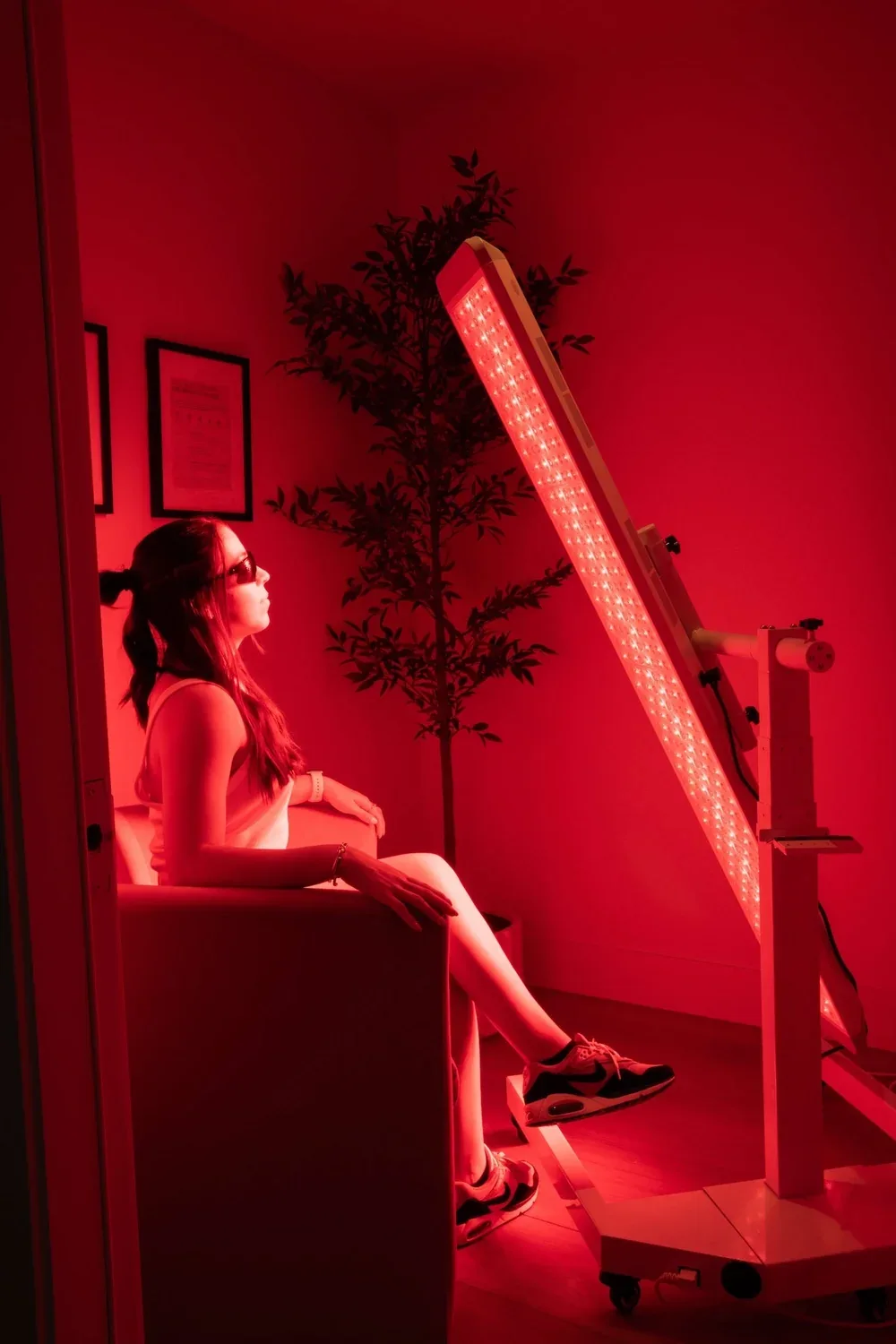
Research does not establish that every home red light therapy device will:
- Produce the same experience
- Deliver equivalent light output
- Provide universal results
- Replace medical care
- Work within a guaranteed time
- Produce better results simply because it has more LEDs
- Be appropriate for every user
- Match the equipment used in published clinical studies
Claims involving pain relief, inflammation, circulation, healing, hormonal health, weight loss, disease management, or other medical outcomes should not be assumed unless they are specifically supported by the authorized labeling for that exact device.
General statements such as “clinically proven” or “science-backed” can also be misleading when they do not identify the device, study, tested protocol, and specific outcome being discussed.
How Red Light Therapy Devices Work
Red light therapy devices are designed to expose a selected area to light within specified wavelength ranges.
The biological mechanisms studied under photobiomodulation are complex and remain an active area of research. For consumers, the more practical issue is whether the specifications and operating instructions for a particular product are clearly disclosed.
A home device should not be evaluated solely by the number of LEDs or its advertised wattage. Higher numbers do not automatically mean a device is more suitable or more effective.
When available, review:
- Exact wavelength specifications
- Irradiance measured at a stated distance
- Recommended distance from the device
- Exposure-area dimensions
- Built-in timer settings
- Manufacturer usage instructions
- Eye-safety information
- Electrical certifications
- Warranty coverage
- Regulatory status and intended use
Comparisons are most useful when manufacturers report specifications using consistent measurement methods. Specifications from different brands may not always be directly comparable.
Does FDA Clearance Mean Red Light Therapy Is Proven?
Some photobiomodulation and LED light devices have received FDA 510(k) clearance for specific intended uses. Other products may be sold as general wellness devices and may not have the same regulatory status.
FDA clearance applies to the specific device and the specific intended use stated in its clearance documentation. It does not apply automatically to every product made by that company, every wavelength emitted by the device, or every benefit mentioned in general red light therapy content.
A 510(k) clearance generally means the FDA determined that the device was substantially equivalent to an appropriate legally marketed device for its stated intended use.
FDA clearance should not be described as:
- FDA approval
- Proof of every advertised benefit
- Approval of the entire red light therapy category
- Confirmation that all similar-looking products are equivalent
- Authorization to make claims beyond the cleared intended use
Prime Regeneration distinguishes between FDA cleared and FDA approved and does not use the terms interchangeably.
What Are Realistic Expectations?

There is no universal timeline for red light therapy use. Manufacturer recommendations vary according to device type, light output, distance, intended use, and target area.
It is best to approach a home red light therapy device as one component of a broader personal wellness or skincare routine rather than as a cure-all.
Realistic expectations include:
- Following the instructions for the exact product
- Understanding that devices have different specifications
- Allowing for differences in individual experience
- Evaluating the device based on its documented intended use
- Recognizing that research on one product may not apply to another
“Results may vary” should not be used to justify unsupported claims. Any expected outcome should still be consistent with the manufacturer’s authorized product labeling.
Types of Red Light Therapy Devices for Home Use
The best format depends on where and how you plan to use the device.
Red Light Therapy Panels
Panels provide a larger illuminated area and may be available in portable, medium, large, or full-body configurations.
When comparing panels, consider the illuminated dimensions, mounting options, recommended operating distance, control settings, and space required around the unit.
A larger panel may provide more coverage, but it also requires more room and may have different electrical and mounting requirements.
Red Light Therapy Masks
Wearable masks are designed primarily for facial use. They may use red, near-infrared, blue, or multiple light settings, depending on the model.
Check the device’s intended use, fit, session controls, eye-safety instructions, charging method, and warranty.
Do not assume that all masks have the same regulatory status or wavelength configuration.
Flexible Pads and Wearable Devices
Flexible pads, wraps, gloves, hats, and similar products are designed for more localized positioning.
Consider the size of the illuminated section, controller settings, power source, cleaning instructions, and whether the product can be comfortably positioned as directed.
Handheld and Portable Devices
Smaller devices may be useful when portability or targeted placement is the priority. The tradeoff is generally a smaller illuminated area.
Review the recommended distance and operating time because these may differ from larger panels.
How to Choose a Red Light Therapy Device
Before purchasing, compare more than price and appearance.
1. Identify the Intended Use
Do not rely on broad claims made about red light therapy as a category.
2. Review the Wavelengths
The manufacturer should clearly disclose the wavelengths produced by the device.
More wavelengths are not automatically better. The important question is whether the device specifications are appropriate for its documented intended use.
3. Examine Light-Output Information
Look for irradiance or power-density information measured at a stated distance.
Avoid comparing products using wattage alone because electrical wattage does not necessarily describe how much light reaches the selected area.
4. Consider Coverage
A face mask, handheld unit, flexible pad, and full-body panel provide very different coverage.
Choose a format that matches the area, available space, and usage method described by the manufacturer.
5. Verify Regulatory Language
FDA registration, FDA listing, and FDA clearance do not all mean the same thing.
6. Review Safety Instructions
Check whether the manufacturer provides clear guidance concerning:
- Eye protection
- Photosensitivity
- Session length
- Device distance
- Skin contact
- Cleaning
- Storage
- Contraindications
- Electrical operation
7. Check the Warranty and Seller
Review the manufacturer warranty, return requirements, and seller information before purchasing.
Authorized-retailer status should be confirmed for the applicable brand rather than assumed for every product on a retailer’s website.
Using Red Light Therapy Devices Responsibly
Always follow the operating and safety instructions supplied with your specific device.
General precautions include:
- Follow the manufacturer’s session-duration and frequency instructions
- Follow all eye-safety requirements
- Do not stare directly into illuminated LEDs
- Do not exceed the recommended operating distance or exposure time
- Keep the device clean and dry as instructed
- Stop using the device if you experience unexpected discomfort or irritation
- Do not use damaged electrical equipment
- Keep the device away from children unless the manufacturer permits supervised use
Speak with a qualified healthcare professional before use when you are pregnant, have a diagnosed health condition, have concerns about photosensitivity, or take medications or use products that may increase sensitivity to light.
This guidance is precautionary and does not mean that a device has been evaluated for any specific medical condition.
Why Shop for Red Light Therapy Devices at Prime Regeneration?
Prime Regeneration offers red light therapy equipment for customers creating home wellness, skincare, and personal-use spaces.
Depending on the product, available information may include:
- Manufacturer specifications
- Wavelength details
- Device dimensions
- Included components
- Manufacturer warranty information
- Usage documentation
- Regulatory information supplied by the manufacturer
- U.S.-based customer support
Authorized-retailer status is identified where applicable. Warranty terms, regulatory status, specifications, and intended uses vary by manufacturer and device.
Prime Regeneration does not guarantee individual outcomes or extend medical claims beyond the documentation authorized for a specific product.
Adding Red Light Therapy to a Home Wellness Space
Red light therapy equipment can be incorporated into a dedicated wellness room, home spa area, skincare space, or personal relaxation area.
Some homeowners place red light therapy devices in spaces that also contain saunas, massage chairs, or other wellness equipment. Each product should still be operated independently according to its own installation and safety instructions.
Consider:
- Electrical outlet access
- Required mounting space
- Ventilation around the device
- Recommended operating distance
- Safe storage
- Eye-safety requirements
- Space for sitting or standing
- Protection from moisture
Unless the manufacturer specifically authorizes it, do not install a red light therapy device inside a sauna, steam room, shower, or wet environment.
Frequently Asked Questions
Is red light therapy legit?
Photobiomodulation is a real field of scientific and clinical research. However, the evidence does not validate every product or marketing claim.
The most reliable approach is to evaluate the exact device, its specifications, intended use, regulatory status, and manufacturer instructions.
Is every red light therapy device FDA cleared?
No. Regulatory status varies by product.
Some devices have FDA clearance for a specific intended use. Others may be marketed for general wellness or cosmetic purposes. Verify claims using the exact device name and model number.
Is FDA clearance the same as FDA approval?
No. FDA 510(k) clearance and FDA premarket approval are different regulatory pathways.
A 510(k) clearance generally concerns substantial equivalence to an appropriate legally marketed device. Any clearance applies to the stated device and intended use.
How often should a red light therapy device be used?
There is no universal schedule for every device.
Follow the session duration, frequency, operating distance, and safety instructions supplied by the manufacturer of your exact product.
Are more LEDs or higher power always better?
No. LED count and wattage alone do not establish device quality or suitability.
Wavelengths, irradiance, measurement distance, illuminated area, exposure time, controls, intended use, and product construction should all be considered.
Can red light therapy replace medical or skincare care?
A general wellness device should not be used as a substitute for medical evaluation, prescribed care, sun protection, or an established skincare routine.
Questions involving a medical condition or personal treatment plan should be directed to a qualified healthcare professional.
Can red light therapy devices be used inside a sauna?
Only when the manufacturer specifically authorizes that environment.
Heat, humidity, steam, and moisture may damage equipment, create electrical risks, or void the warranty. Most consumer red light therapy devices should not be placed inside a sauna or steam room unless expressly designed for that use.
Final Verdict: Is Red Light Therapy Legit?
Red light therapy is more than an internet trend. Photobiomodulation is a real area of research, and specifically regulated devices exist for defined intended uses.
At the same time, the science does not support treating every device as equivalent or accepting every marketing claim at face value.
Before purchasing a red light therapy device, focus on:
- The exact model
- Documented intended use
- Wavelength specifications
- Light-output information
- Coverage area
- Safety instructions
- Regulatory status
- Warranty support
- Manufacturer documentation
A carefully selected device can be a practical addition to a home wellness space when it is used according to its instructions and approached with realistic expectations.
Important disclaimer: This article is for general educational purposes and is not medical advice. Products offered for general wellness are not intended to diagnose, treat, cure, or prevent disease. Some individual devices may have FDA clearance for a specific intended use. Any clearance applies only to that device and the intended use described in its clearance documentation. Consult a qualified healthcare professional regarding health conditions, pregnancy, photosensitivity, medications, or personal medical concerns.