

Steam Shower Installation Requirements: Complete Guide
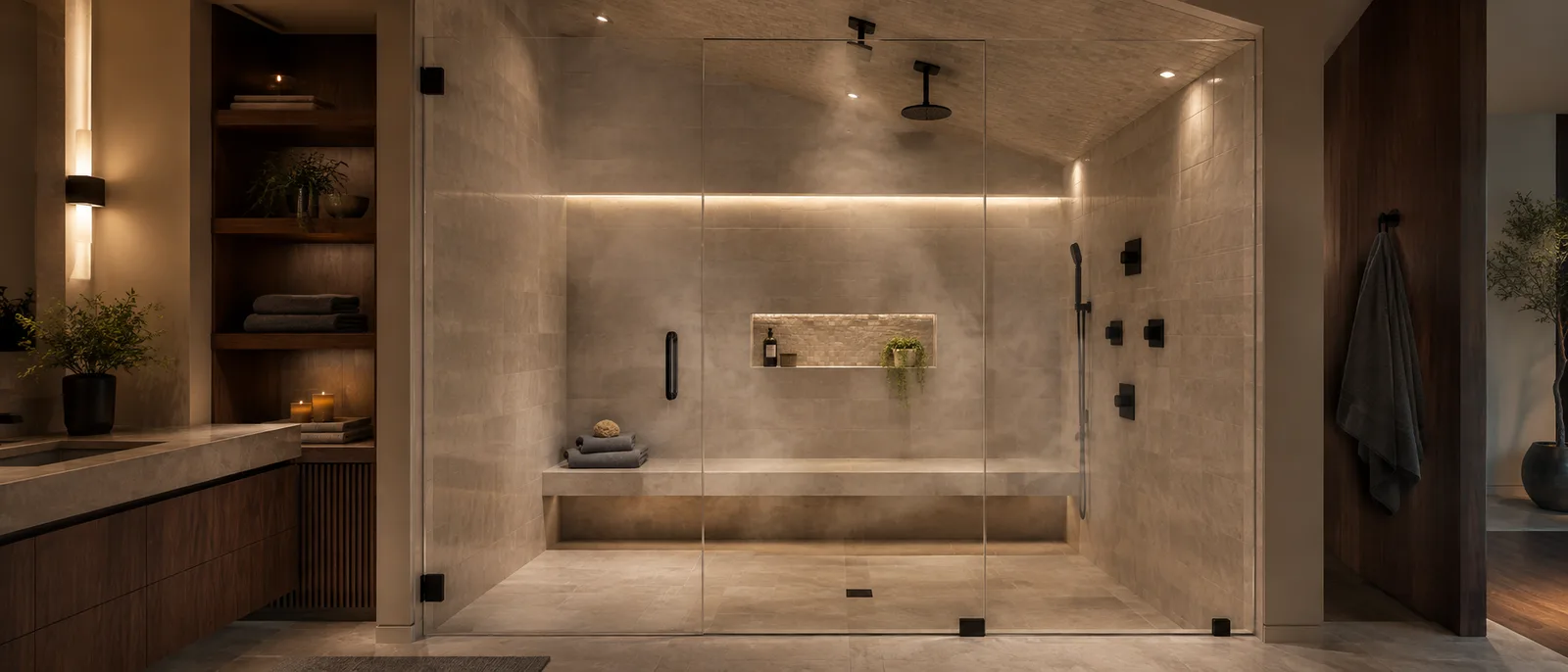
A residential steam shower requires more planning than a standard shower because the enclosure must manage both liquid water and water vapor while also accommodating a steam generator, plumbing, electrical service, controls, drainage, and ventilation.
Before construction begins, the enclosure design and steam system should be planned together. Manufacturer requirements vary by brand and model, so final dimensions, generator placement, electrical requirements, steam-line routing, and installation details should always be confirmed using the current installation manual for the equipment being used.
In this article
- The Steam Shower Must Be Fully Enclosed and Sealed
- Exterior Walls Require Additional Planning
- Waterproofing and Vapor Management Are Essential
- Generator Sizing: Get This Right
- Steam Generator Placement and Service Access
- Electrical Installation Must Be Done Safely
- Plumbing Requirements for a Steam Generator
- Ventilation Planning
- Windows and Glass Require Careful Planning
- Finish Materials Must Handle Heat and Moisture
- Should a Steam Shower Ceiling Be Sloped?
- Steam Head and Control Placement
- Permits and Building-Code Requirements
- Steam Shower Pre-Installation Checklist
- Ready to Compare Steam Shower Equipment?
- Frequently Asked Questions About Steam Shower Installation
The Steam Shower Must Be Fully Enclosed and Sealed
A steam shower must be designed to contain steam during operation. That generally means a fully enclosed shower with walls, a ceiling, and a door or glass enclosure that does not leave large openings at the top or bottom.
MrSteam specifically advises that a residential steam shower be fully enclosed, insulated, and sealed. Standard shower doors with open areas above or below the door are not appropriate for containing steam.
Ceiling height also affects system design. Many residential steam systems use an 8-foot ceiling as a common sizing baseline. Taller ceilings can increase the generator capacity required, while some manufacturers use specific sizing adjustments for 9- or 10-foot ceilings.
Always check the ceiling-height guidance for the exact steam-generator manufacturer you are considering.
Exterior Walls Require Additional Planning
A steam shower can include an exterior wall, but exterior exposure can increase heat loss and may affect generator sizing or enclosure design.
If the steam shower includes exterior walls, windows, or other areas with greater heat transfer, the contractor should confirm insulation, vapor management, and manufacturer sizing requirements before equipment is selected.
Some steam-generator manufacturers include exterior-wall exposure as part of their sizing calculations, while others use different methods. Follow the sizing procedure for the exact system being installed.
Waterproofing and Vapor Management Are Essential
A steam shower must manage both liquid water and water vapor. These are related but different construction requirements.
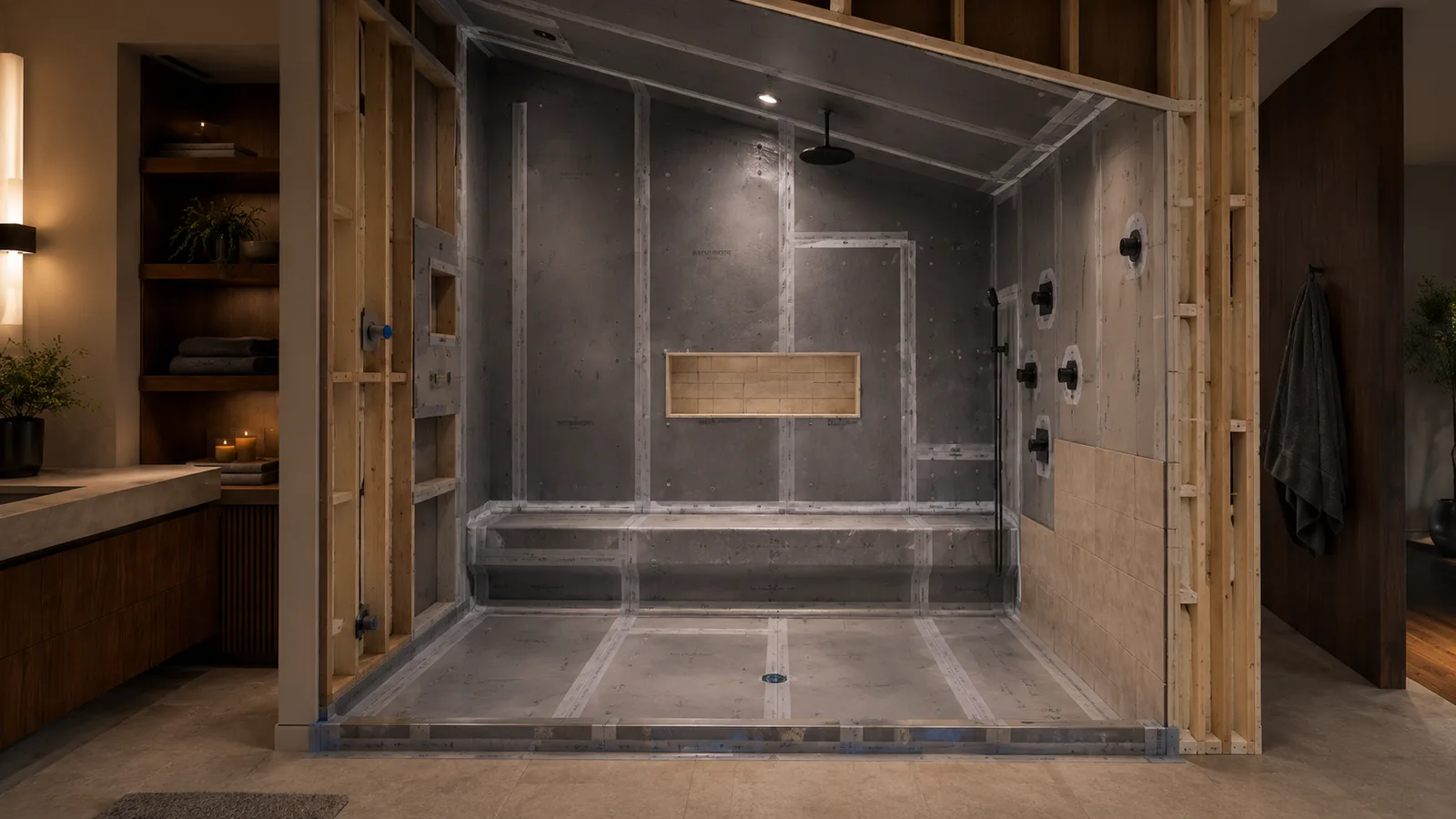
A waterproof membrane prevents liquid water from reaching the structure behind the tile or finish surface. A suitable vapor-retarding system also limits water vapor from migrating into wall and ceiling cavities.
This distinction is particularly important in steam showers. Schluter notes that a waterproofing membrane meeting ordinary shower standards is not automatically sufficient for vapor management in a steam application. For intermittent-use residential steam showers, tile-industry guidance generally calls for low vapor permeance, while continuous-use commercial steam rooms have even stricter requirements.
The walls, ceiling, floor, penetrations, niches, benches, and transitions should all be incorporated into a complete waterproofing and vapor-management system that is approved for the intended steam-shower application.
Your tile installer or contractor should follow the membrane manufacturer's current steam-shower installation instructions.
The shower floor must also be designed to drain properly. Condensation from steam ultimately becomes liquid water, so the floor, drain, waterproofing system, curb or threshold, and any benches or horizontal surfaces should be constructed according to the applicable shower-system and plumbing requirements.
Generator Sizing: Get This Right
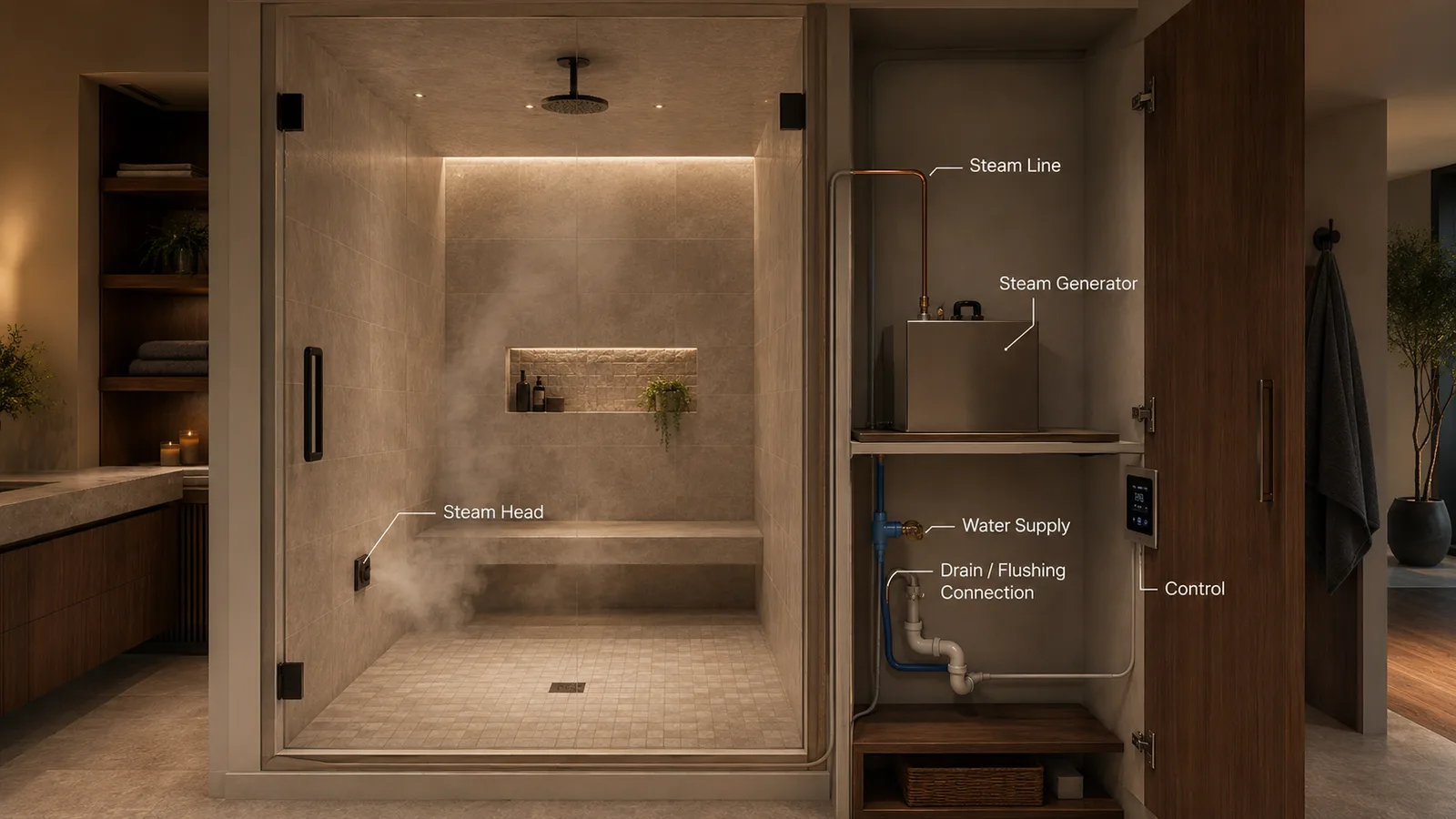
Correct steam-generator sizing starts with the finished dimensions of the steam enclosure.
The basic room volume is:
Length × Width × Height = Cubic Feet
From there, the manufacturer may require adjustments based on ceiling height, wall materials, glass, exterior walls, or other enclosure conditions.
Sizing methods differ by manufacturer. For example, current ThermaSol PRO Series guidance uses basic cubic footage and recommends sizing up for ceilings above 8 feet, while MrSteam also considers enclosure materials and other room characteristics.
Use the sizing chart or calculator for the exact manufacturer and generator series being considered rather than relying on a universal kW formula.
Need help calculating room volume? Read our Steam Generator Sizing Guide for a step-by-step explanation of cubic footage and manufacturer-specific sizing considerations.
Steam Generator Placement and Service Access
The steam generator itself is installed outside the steam enclosure in a dry, accessible location.
Possible locations can include a vanity cabinet, closet, mechanical space, climate-controlled attic, or basement, depending on the manufacturer's instructions.
The generator must remain accessible for inspection, maintenance, and service. It should not be permanently enclosed behind finished walls or installed inside the steam shower.
Maximum permitted distance from the steam shower varies by manufacturer. ThermaSol currently allows certain residential generators to be installed up to 50 feet from the shower, while MrSteam permits certain systems to be located farther away depending on the configuration.
Always follow the exact generator-location, clearance, pipe-routing, and environmental requirements in the installation manual.
Electrical Installation Must Be Done Safely
Steam generators are permanently installed electrical appliances and generally require dedicated electrical service sized for the specific generator.
Residential systems commonly operate on 208V or 240V, but breaker size, wire size, disconnect requirements, grounding, and other electrical specifications depend on the exact model. MrSteam and Kohler residential steam systems, for example, publish model-specific electrical requirements.
Electrical installation should be completed by a qualified electrician in accordance with the manufacturer's instructions and applicable local electrical codes.
Before selecting a generator, confirm that the home's electrical service can support the required load.
Plumbing Requirements for a Steam Generator
A residential steam generator typically requires several plumbing connections, including:
- A cold-water supply to the generator
- A steam line running from the generator to the steam head
- Generator drainage or flushing provisions where required
- A shower drain for the enclosure
- Any manufacturer-required drain pan or auxiliary drainage
Steam-line material, diameter, pitch, maximum distance, and routing requirements vary by manufacturer and should be followed exactly.
For example, MrSteam currently specifies requirements for steam-line material and pitch, while ThermaSol provides specific instructions for generator placement, water supply, steam-head routing, and drainage.
Plumbing work should be completed by an appropriately qualified professional according to manufacturer instructions and local plumbing requirements.
Ventilation Planning
A steam shower needs to contain steam while it is operating, so an exhaust fan or HVAC vent should generally not be installed inside the steam enclosure unless specifically permitted by the system design.
Instead, ventilation is typically provided in the larger bathroom outside the steam enclosure to help remove residual humidity after use.
MrSteam specifically advises against heating, ventilation, or air-conditioning components inside the steam room. ThermaSol likewise recommends planning bathroom ventilation so moisture can be cleared after the steam session.
Your contractor should size and locate bathroom ventilation according to the room design, applicable codes, and equipment manufacturer's instructions.
Windows and Glass Require Careful Planning
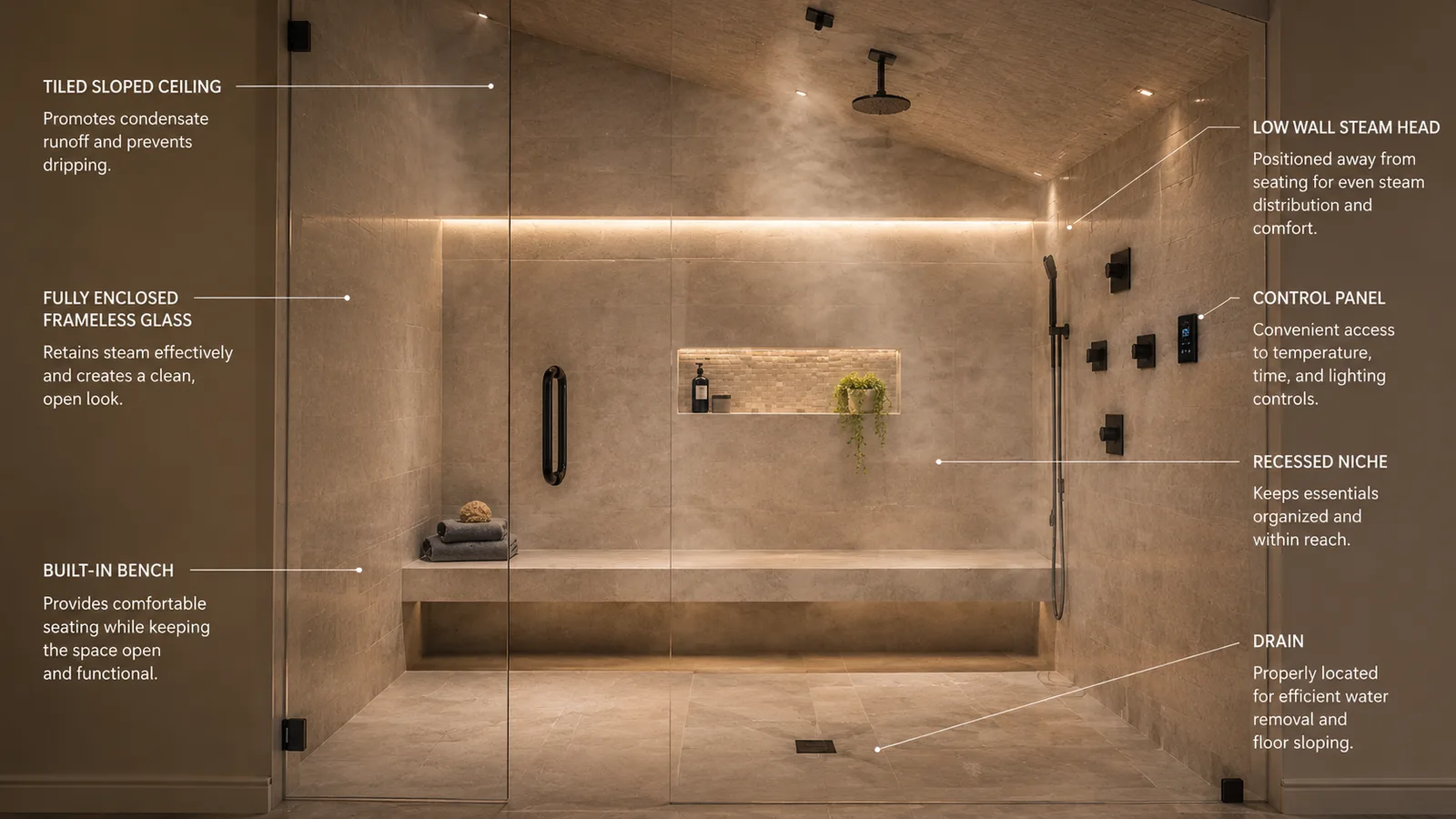
Glass is common in residential steam showers, but it must be appropriate for the enclosure and installation.
MrSteam recommends that windows incorporated into a steam room be double-paned and made from tempered safety glass.
Steam-shower doors and glass panels should also be configured so the enclosure can contain steam during operation. Large openings above or below a standard shower door can allow steam to escape.
If the design includes exterior windows, large glass areas, or multiple glass walls, confirm whether those features affect generator sizing for the manufacturer being used.
Finish Materials Must Handle Heat and Moisture
Steam-shower finish materials should be suitable for prolonged exposure to heat, water, and water vapor.
Common choices include porcelain tile, ceramic tile, natural stone, glass, acrylic systems that are specifically steam rated, and other nonporous or moisture-resistant materials approved for the application.
Natural stone may require additional sealing and maintenance, and some materials can affect steam-generator sizing depending on the manufacturer.
ThermaSol, for example, advises that wall, ceiling, and floor materials be suitable for steam use and notes that acrylic enclosures must be specifically steam rated by their manufacturer.
Follow the tile, membrane, grout, sealant, and enclosure manufacturers' instructions for the complete assembly.
Should a Steam Shower Ceiling Be Sloped?
Condensation naturally forms on the ceiling during steam use.
Some manufacturers recommend sloping the ceiling so condensation can move toward the wall rather than dripping directly onto the person using the shower.
For example, ThermaSol recommends approximately 1 inch of slope per foot in its installation instructions, while MrSteam notes that a slight slope may be especially useful in larger steam showers.
Because recommendations can vary, follow the steam-system manufacturer and tile-system requirements for the specific project.
Steam Head and Control Placement
Steam-head and control placement affects comfort, safety, and system operation.
The steam head is generally installed low on the wall and away from the primary seating position so hot steam does not discharge directly toward the user.
Exact placement varies by manufacturer. MrSteam typically recommends installing its steam head approximately 6–12 inches above the floor and away from the seating area, while ThermaSol publishes model-specific placement requirements for its different steam heads.
Controls should also be installed according to the manufacturer's height, cable-routing, and distance-from-steam-head requirements.
Permits and Building-Code Requirements
Steam-shower installations may be subject to plumbing, electrical, building, waterproofing, or mechanical requirements depending on the jurisdiction and scope of the project.
Before construction begins, confirm with the local building authority whether permits or inspections are required.
Electrical and plumbing work should comply with applicable codes, and the steam generator, enclosure, waterproofing system, drains, controls, and other components should be installed according to their manufacturers' instructions.
For remodeling projects, permit requirements may also depend on whether walls, plumbing, electrical circuits, or structural elements are being modified.
Steam Shower Pre-Installation Checklist
Before construction begins, confirm:
- Finished interior length, width, and ceiling height
- Steam-generator size based on manufacturer guidance
- Wall, ceiling, floor, and glass materials
- Waterproofing and vapor-management system
- Floor drainage and slope
- Generator location and required service access
- Water-supply connection
- Steam-line routing and maximum permitted distance
- Generator drain or drain-pan requirements
- Voltage, amperage, breaker, and electrical-service requirements
- Steam-head location
- Control location and cable routing
- Bathroom ventilation outside the steam enclosure
- Required professional electrical and plumbing work
- Local permit and inspection requirements
- Access to current manufacturer installation manuals
A steam-shower project often involves coordination among a general contractor or tile installer, plumber, electrician, and equipment manufacturer.
Planning the enclosure and steam system together before walls are closed can prevent problems with generator sizing, electrical capacity, steam-line routing, control wiring, waterproofing, and service access later in the project.
Ready to Compare Steam Shower Equipment?
Once the enclosure dimensions and basic installation requirements are known, the next step is to compare compatible steam generators, controls, steam heads, and system components.
Prime Regeneration carries steam shower equipment from established manufacturers, including systems and components for residential steam-shower projects.
Before ordering, compare the generator's room-capacity range, electrical requirements, compatible controls, required accessories, installation clearances, steam-line limitations, and manufacturer warranty information.
Explore Prime Regeneration's Steam Generators and Steam Shower Systems collections to compare available equipment, specifications, controls, and manufacturer documentation.
For generator selection, visit our Steam Generator Sizing Guide.
Frequently Asked Questions About Steam Shower Installation
How much does steam shower installation cost?
Steam-shower installation costs vary considerably depending on whether the project is new construction or a remodel, the size and finish of the enclosure, generator and control selection, glass, waterproofing, tile work, plumbing modifications, electrical upgrades, and local labor rates.
A simple conversion of an existing shower can have very different costs from a fully custom steam enclosure.
For accurate budgeting, obtain local contractor estimates after the steam-shower design and equipment requirements have been defined.
Can I add a steam shower to my existing bathroom?
In many cases, yes. Existing showers can sometimes be converted for steam use, but the enclosure generally needs to be fully enclosed and properly designed for waterproofing and vapor management.
The project may also require new electrical service, a water supply to the generator, steam piping, control wiring, drainage modifications, glass changes, and access for the generator.
A contractor experienced with steam showers should evaluate the existing enclosure before equipment is selected.
What size generator do I need?
Start by calculating the finished steam enclosure's cubic volume:
Length × Width × Height = Cubic Feet
Then apply the sizing method required by the steam-generator manufacturer. Ceiling height, materials, glass, exterior walls, and other conditions may affect the final selection depending on the brand.
Use the manufacturer's current sizing calculator or chart for the exact generator series rather than selecting equipment based on kW alone.
How long does steam shower installation take?
There is no universal installation timeline.
Project length depends on whether the bathroom is new construction or a remodel, demolition requirements, plumbing and electrical work, waterproofing and cure times, tile installation, custom glass, equipment availability, inspections, and contractor scheduling.
A contractor can provide a more accurate timeline after the scope of work and equipment have been finalized.
Where can a steam generator be installed?
A residential steam generator is normally installed outside the steam enclosure in a dry, accessible, climate-controlled location.
Depending on the manufacturer, possible locations can include a vanity cabinet, closet, mechanical space, attic, or basement.
Do not install the generator inside the steam shower, outdoors, or in locations where it may freeze unless the manufacturer specifically approves that installation.
Does a steam shower need a special waterproofing membrane?
A steam shower needs a system that manages both liquid water and water vapor.
Not every standard shower waterproofing product has the vapor-permeance characteristics required for steam use. Choose a membrane or shower system specifically approved by its manufacturer for the intended residential steam-shower application.
Installation Disclaimer: This guide provides general educational information only. Steam-generator requirements, plumbing, electrical specifications, waterproofing systems, clearances, control placement, and construction requirements vary by manufacturer, model, and jurisdiction. Always follow the current installation manuals and applicable local codes and use appropriately qualified professionals for electrical, plumbing, and construction work.


