

Sauna Heater Sizing Guide: Calculate the Right Capacity

In this article
- How Sauna Heater Sizing Works
- Calculate Your Sauna's Cubic Footage
- Account for Sauna Construction
- The same actual room volume can require different heater capacity depending on the sauna's construction. Manufacturers may adjust sizing for surfaces that do not insulate in the same way as insulated wood walls, including: Glass doors Glass walls or windows Brick Concrete Tile Log or other solid-wall construction Rather than adding an arbitrary percentage to the heater size, follow the calculation method provided by the manufacturer of the heater you are considering. For example, Harvia's calculator asks for sauna dimensions as well as construction details such as glass and log walls, while HUUM calculates an adjusted sauna volume that incorporates uninsulated surfaces.
- How Glass and Uninsulated Surfaces Affect Heater Sizing
- Glass and other uninsulated surfaces can increase the effective volume used when sizing a sauna heater. However, the adjustment should be made using the heater manufacturer's method rather than automatically adding a fixed number of kilowatts. For example, sauna-heater manufacturers may ask for the square footage or square meters of glass and other uninsulated surfaces and use that information to calculate an adjusted room volume. The resulting effective volume is then compared with the heater's approved room-size range. This is particularly important for modern sauna cabins with large glass fronts or panoramic glass walls.
- Calculating Sauna Volume Before Selecting a Heater
- Consider a sauna with interior dimensions of: 8 feet long 6 feet wide 7 feet high The actual room volume is: 8 × 6 × 7 = 336 cubic feet Next, identify any glass doors, glass walls, masonry, tile, log construction, or other surfaces that the heater manufacturer requires you to include in its adjusted-volume calculation. Once the effective sauna volume has been determined, compare that number with the published room-volume range for the specific heater model. Do not select a heater based only on a general kW formula. Two heaters with the same nominal kilowatt rating may have different manufacturer-approved room ranges or installation requirements. For example, Harvia's 7 kW Cilindro PC70XE currently lists a sauna-room volume range of 212–353 cubic feet, illustrating why the exact manufacturer's published range matters more than a universal cubic-feet-per-kW rule.
- Why Correct Heater Sizing Matters
- Use Manufacturer Sauna Heater Calculators
- Several sauna-heater manufacturers provide sizing calculators that account for more than room dimensions. Harvia, HUUM, and Saunum currently offer heater-sizing tools that can help shoppers compare room volume and construction characteristics with suitable heater models. A manufacturer calculator is preferable to a generic calculator because it is tied to that manufacturer's heater specifications and product range. After using a calculator, confirm the result against the current product manual or technical documentation for the exact heater.
- This Guide Applies to Traditional Sauna Heaters
- This sizing method applies to traditional sauna rooms that use an electric or wood-burning sauna heater. Infrared saunas use infrared heating elements and are engineered differently. They should not be sized by applying traditional sauna-heater kilowatt calculations to the cabin. If you are purchasing a complete infrared sauna, follow the specifications and electrical requirements provided for that complete sauna model. For a traditional sauna, use the sizing guidance supplied by the specific heater manufacturer.
- Sauna Heater Electrical and Installation Considerations
- Heater capacity is only one part of selecting the correct model. Before purchasing, review the manufacturer's requirements for: Voltage Phase Required circuit or breaker Wiring Control system Temperature sensor placement Heater safety clearances Minimum room volume Mounting or floor placement Ventilation Sauna stones Guard requirements when applicable Do not assume that every heater with the same kilowatt rating has identical electrical or installation requirements. Electrical installation should be completed according to the manufacturer's instructions and applicable electrical codes by a qualified professional when required.For broader planning considerations, read our Sauna Installation Guide.
- Manufacturer Specifications Are the Final Sizing Authority
- Once you have calculated the sauna's actual and adjusted volume, compare it with the published room-size range for the exact heater model. Check: Minimum sauna volume Maximum sauna volume Heater output Required controls Electrical specifications Safety clearances Stone requirements Installation configuration Manufacturer sizing notes Do not assume that two 8 kW heaters from different manufacturers are interchangeable simply because their power ratings are the same. Manufacturer calculators and product documentation are the final sizing reference for the specific heater being considered.
- Compare the Adjusted Volume With the Heater's Published Range
- After determining the adjusted sauna volume, compare it directly with the room-volume range published for the heater you are considering.Prime Regeneration carries sauna heaters from manufacturers including Harvia, HUUM, and Saunum, allowing shoppers to compare different heater styles, capacities, controls, stone volumes, and manufacturer-recommended sauna-room ranges. Shop Sauna Heaters
- Getting Help With Sauna Heater Selection
- For custom sauna rooms or unusual construction, contact the heater manufacturer or review its sizing calculator and technical documentation before ordering. Prime Regeneration can help customers compare available heater specifications, including published room-volume ranges, kilowatt ratings, control requirements, included components, and manufacturer documentation. Prime Regeneration does not provide engineering, electrical design, site inspection, or installation services. Final heater suitability and installation requirements should be confirmed using manufacturer documentation and qualified professionals where appropriate.Browse sauna heaters at Prime Regeneration to compare published room-volume ranges, controls, specifications, and available configurations.
- Frequently Asked Questions About Sauna Heater Sizing
How Sauna Heater Sizing Works
Choosing the right sauna heater starts with the interior volume of the sauna, but cubic footage is only the first part of the calculation.
Glass doors and windows, brick, concrete, tile, log walls, insulation, and other construction details can increase the effective volume the heater must accommodate. Different manufacturers may also use different sizing methods and publish different room-volume ranges for their heater models.
The safest approach is to:
- Calculate the actual interior volume of the sauna
- Account for glass and other uninsulated surfaces according to the heater manufacturer's instructions
- Determine the adjusted or effective sauna volume
- Select a heater whose published room-size range includes that adjusted volume
- Confirm electrical requirements, safety clearances, ventilation, and installation requirements for the exact model
Manufacturer sizing documentation should be the final authority when selecting a sauna heater.
Harvia, HUUM, and Saunum all provide heater-sizing tools or published guidance that accounts for room size and construction characteristics rather than relying solely on one universal cubic-feet-per-kilowatt formula.
Calculate Your Sauna's Cubic Footage
Start by measuring the interior length, width, and height of the sauna.
Sauna volume = Length × Width × Height
For example, a sauna measuring:
- 6 feet long
- 5 feet wide
- 7 feet high
has an actual interior volume of:
6 × 5 × 7 = 210 cubic feet
This number is your starting point—not necessarily your final heater-sizing volume.
Before selecting a heater, check whether glass, masonry, log walls, or other uninsulated surfaces require additional volume to be added according to the manufacturer's sizing method. Harvia and HUUM both specifically account for construction characteristics when determining suitable heater capacity.
Account for Sauna Construction
The same actual room volume can require different heater capacity depending on the sauna's construction.
Manufacturers may adjust sizing for surfaces that do not insulate in the same way as insulated wood walls, including:
- Glass doors
- Glass walls or windows
- Brick
- Concrete
- Tile
- Log or other solid-wall construction
Rather than adding an arbitrary percentage to the heater size, follow the calculation method provided by the manufacturer of the heater you are considering.
For example, Harvia's calculator asks for sauna dimensions as well as construction details such as glass and log walls, while HUUM calculates an adjusted sauna volume that incorporates uninsulated surfaces.
How Glass and Uninsulated Surfaces Affect Heater Sizing
Glass and other uninsulated surfaces can increase the effective volume used when sizing a sauna heater.
However, the adjustment should be made using the heater manufacturer's method rather than automatically adding a fixed number of kilowatts.
For example, sauna-heater manufacturers may ask for the square footage or square meters of glass and other uninsulated surfaces and use that information to calculate an adjusted room volume. The resulting effective volume is then compared with the heater's approved room-size range.
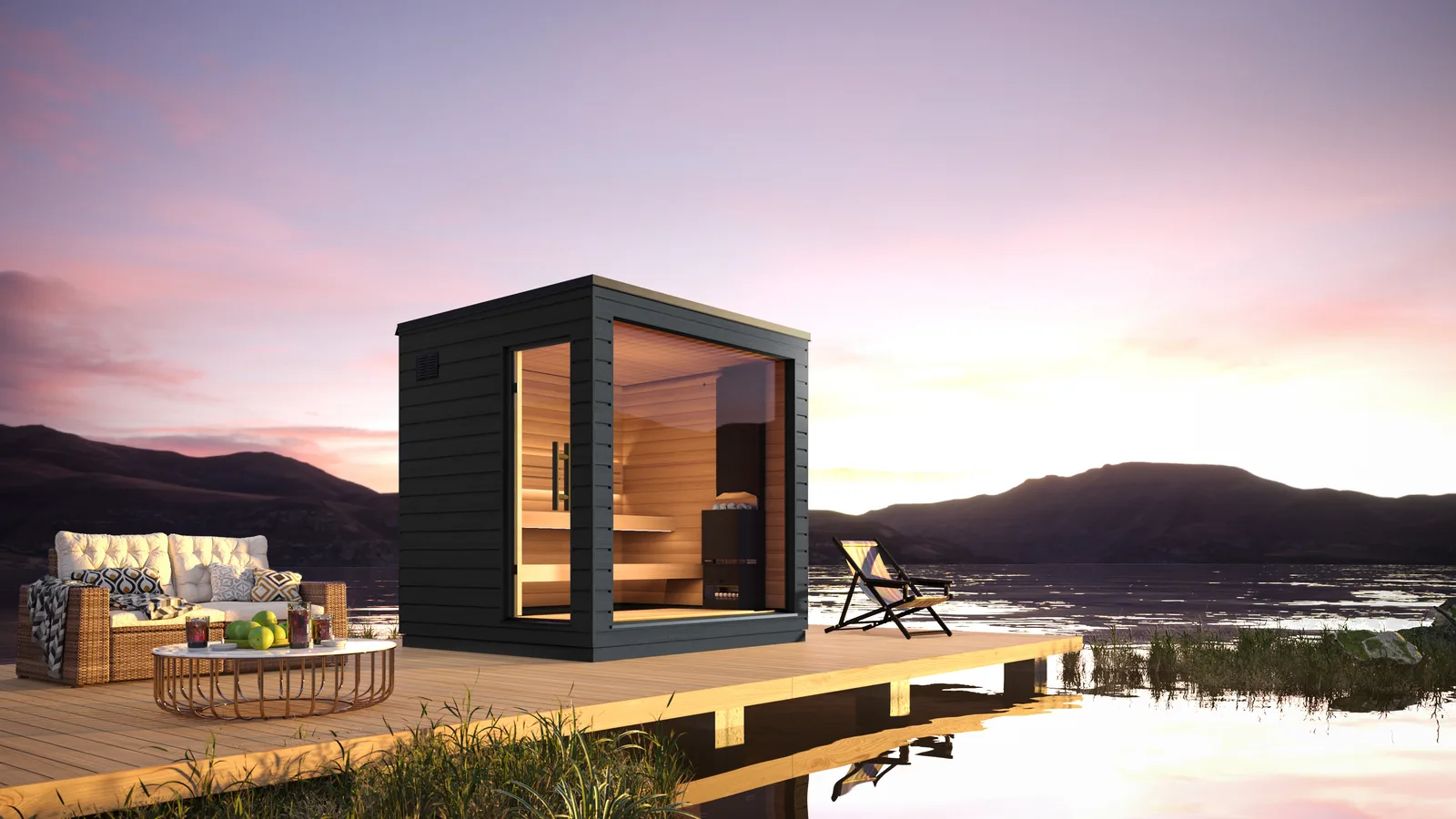
This is particularly important for modern sauna cabins with large glass fronts or panoramic glass walls.
Calculating Sauna Volume Before Selecting a Heater
Consider a sauna with interior dimensions of:
- 8 feet long
- 6 feet wide
- 7 feet high
The actual room volume is:
8 × 6 × 7 = 336 cubic feet
Next, identify any glass doors, glass walls, masonry, tile, log construction, or other surfaces that the heater manufacturer requires you to include in its adjusted-volume calculation.
Once the effective sauna volume has been determined, compare that number with the published room-volume range for the specific heater model.
Do not select a heater based only on a general kW formula. Two heaters with the same nominal kilowatt rating may have different manufacturer-approved room ranges or installation requirements.
For example, Harvia's 7 kW Cilindro PC70XE currently lists a sauna-room volume range of 212–353 cubic feet, illustrating why the exact manufacturer's published range matters more than a universal cubic-feet-per-kW rule.
Why Correct Heater Sizing Matters
A heater should be selected within the sauna-room range specified by its manufacturer.
A heater that is below the required range may have difficulty heating the room as intended, particularly when the sauna includes substantial glass or other heat-retaining surfaces.
Choosing a substantially larger heater is not automatically better either. The heater still needs to be appropriate for the room volume, construction, controls, electrical system, clearances, and installation configuration specified by the manufacturer.
Do not use a universal rule such as staying within “5–10%” of a calculated kW value. Match the adjusted sauna volume to the manufacturer's published heater range instead.
Use Manufacturer Sauna Heater Calculators
Several sauna-heater manufacturers provide sizing calculators that account for more than room dimensions.
Harvia, HUUM, and Saunum currently offer heater-sizing tools that can help shoppers compare room volume and construction characteristics with suitable heater models.
A manufacturer calculator is preferable to a generic calculator because it is tied to that manufacturer's heater specifications and product range.
After using a calculator, confirm the result against the current product manual or technical documentation for the exact heater.
This Guide Applies to Traditional Sauna Heaters
This sizing method applies to traditional sauna rooms that use an electric or wood-burning sauna heater.
Infrared saunas use infrared heating elements and are engineered differently. They should not be sized by applying traditional sauna-heater kilowatt calculations to the cabin.
If you are purchasing a complete infrared sauna, follow the specifications and electrical requirements provided for that complete sauna model.
For a traditional sauna, use the sizing guidance supplied by the specific heater manufacturer.
Sauna Heater Electrical and Installation Considerations
Heater capacity is only one part of selecting the correct model.
Before purchasing, review the manufacturer's requirements for:
- Voltage
- Phase
- Required circuit or breaker
- Wiring
- Control system
- Temperature sensor placement
- Heater safety clearances
- Minimum room volume
- Mounting or floor placement
- Ventilation
- Sauna stones
- Guard requirements when applicable
Do not assume that every heater with the same kilowatt rating has identical electrical or installation requirements.
Electrical installation should be completed according to the manufacturer's instructions and applicable electrical codes by a qualified professional when required.
For broader planning considerations, read our Sauna Installation Guide.
Manufacturer Specifications Are the Final Sizing Authority
Once you have calculated the sauna's actual and adjusted volume, compare it with the published room-size range for the exact heater model.
Check:
- Minimum sauna volume
- Maximum sauna volume
- Heater output
- Required controls
- Electrical specifications
- Safety clearances
- Stone requirements
- Installation configuration
- Manufacturer sizing notes
Do not assume that two 8 kW heaters from different manufacturers are interchangeable simply because their power ratings are the same.
Manufacturer calculators and product documentation are the final sizing reference for the specific heater being considered.
Compare the Adjusted Volume With the Heater's Published Range
After determining the adjusted sauna volume, compare it directly with the room-volume range published for the heater you are considering.
Prime Regeneration carries sauna heaters from manufacturers including Harvia, HUUM, and Saunum, allowing shoppers to compare different heater styles, capacities, controls, stone volumes, and manufacturer-recommended sauna-room ranges.
Getting Help With Sauna Heater Selection
For custom sauna rooms or unusual construction, contact the heater manufacturer or review its sizing calculator and technical documentation before ordering.
Prime Regeneration can help customers compare available heater specifications, including published room-volume ranges, kilowatt ratings, control requirements, included components, and manufacturer documentation.
Prime Regeneration does not provide engineering, electrical design, site inspection, or installation services. Final heater suitability and installation requirements should be confirmed using manufacturer documentation and qualified professionals where appropriate.
Browse sauna heaters at Prime Regeneration to compare published room-volume ranges, controls, specifications, and available configurations.
Frequently Asked Questions About Sauna Heater Sizing
How Do I Calculate the Size of Sauna Heater I Need?
Start by calculating the interior volume of the sauna:
Length × Width × Height = Actual Sauna Volume
Then account for glass, masonry, log walls, and other uninsulated surfaces according to the heater manufacturer's sizing method.
Use the resulting adjusted or effective sauna volume to find a heater whose published room-size range includes your sauna.
The manufacturer's sizing calculator, product specifications, and installation documentation should be the final reference.
What If My Sauna Has a Lot of Glass?
Large glass doors, windows, or panoramic glass walls can increase the effective sauna volume used for heater sizing.
Do not automatically add a fixed number of kilowatts because of the glass. Instead, enter the amount of glass or other uninsulated surface into the manufacturer's calculator or follow the adjustment method provided by the heater manufacturer.
Can I Use a Smaller Sauna Heater and Just Wait Longer?
A heater should be selected within the manufacturer-recommended sauna-volume range.
Choosing a heater below the required range may affect its ability to heat the sauna as intended, particularly when the room contains significant glass, masonry, or other uninsulated surfaces.
Rather than intentionally undersizing the heater, calculate the adjusted room volume and choose a model approved for that range.
Is a Larger Sauna Heater Better?
Not necessarily.
A higher kilowatt rating does not automatically make a heater better for a particular sauna. The heater must still fall within the manufacturer's approved room-volume range and meet the electrical, clearance, control, ventilation, and installation requirements for the room.
Avoid choosing a substantially larger heater simply to achieve faster heating.
How Do I Size a Heater for an Oddly Shaped Sauna?
For a sauna made up of several rectangular areas, calculate the volume of each section separately and add the results together.
Rooms with sloped ceilings, unusual shapes, extensive glass, masonry, or other nonstandard construction may require additional manufacturer guidance.
For complicated layouts, provide the heater manufacturer with the sauna dimensions and construction details or use its sizing calculator when available.
Does Sauna Insulation Affect Heater Sizing?
Yes. Sauna construction can affect the amount of heating capacity required.
Insulated wood-framed walls behave differently from glass, brick, concrete, tile, log walls, and other uninsulated or high-mass surfaces.
Rather than applying a universal percentage increase, follow the sizing method specified by the heater manufacturer.
Can Two Heaters With the Same kW Rating Heat Different Sauna Sizes?
Yes.
Two heaters with the same nominal kilowatt rating can have different manufacturer-published room-volume ranges, installation requirements, stone capacities, controls, and other specifications.
Compare the actual specifications for the exact heater models rather than choosing based on kilowatt rating alone.
Should I Use a Generic Sauna Heater Calculator?
A generic calculator can provide a preliminary estimate, but a manufacturer-specific calculator is preferable when selecting an actual heater.
Manufacturer calculators are designed around that company's heater range and may account for factors such as room dimensions, glass, wall construction, and other surfaces.
Always confirm the result against the current specifications and installation documentation for the exact heater you plan to purchase.


