How Hot Should a Sauna Be? Home Sauna Temperature Guide
Quick answer: A traditional home sauna is commonly used somewhere around 150–195°F (66–91°C). Many people prefer a setting near the lower or middle part of that range. Infrared saunas work at lower air temperatures, often around 110–140°F (43–60°C). These are typical ranges, not a required target: use the range and operating instructions for your specific sauna and heater.
When people ask, “How hot should a sauna be?” the first question is which kind of sauna they mean. Traditional and infrared saunas heat the room in different ways, so their temperature settings are not directly comparable.
Traditional sauna temperature
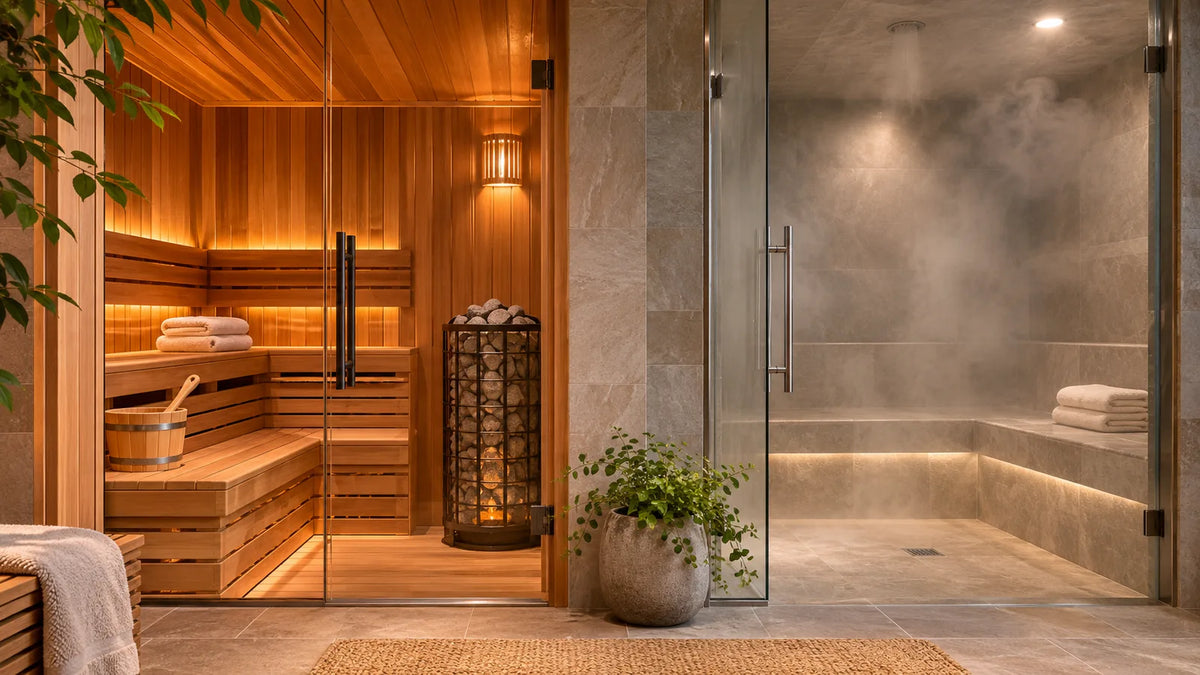
Traditional electric and wood-heated saunas warm the air and the heater stones. A broad, commonly cited operating range is 150–195°F (66–91°C). Harvia notes that a sauna can be enjoyed at about 70°C (158°F), so the highest setting is not automatically the right one for every room.
Choose a setting within the sauna and heater manufacturer’s stated range. If you are unsure where to begin, start at the lower end and adjust gradually over future sessions. A lower setting can still provide the familiar hot-air and steam experience when water is poured onto the stones, if your heater’s instructions allow it.
Infrared sauna temperature
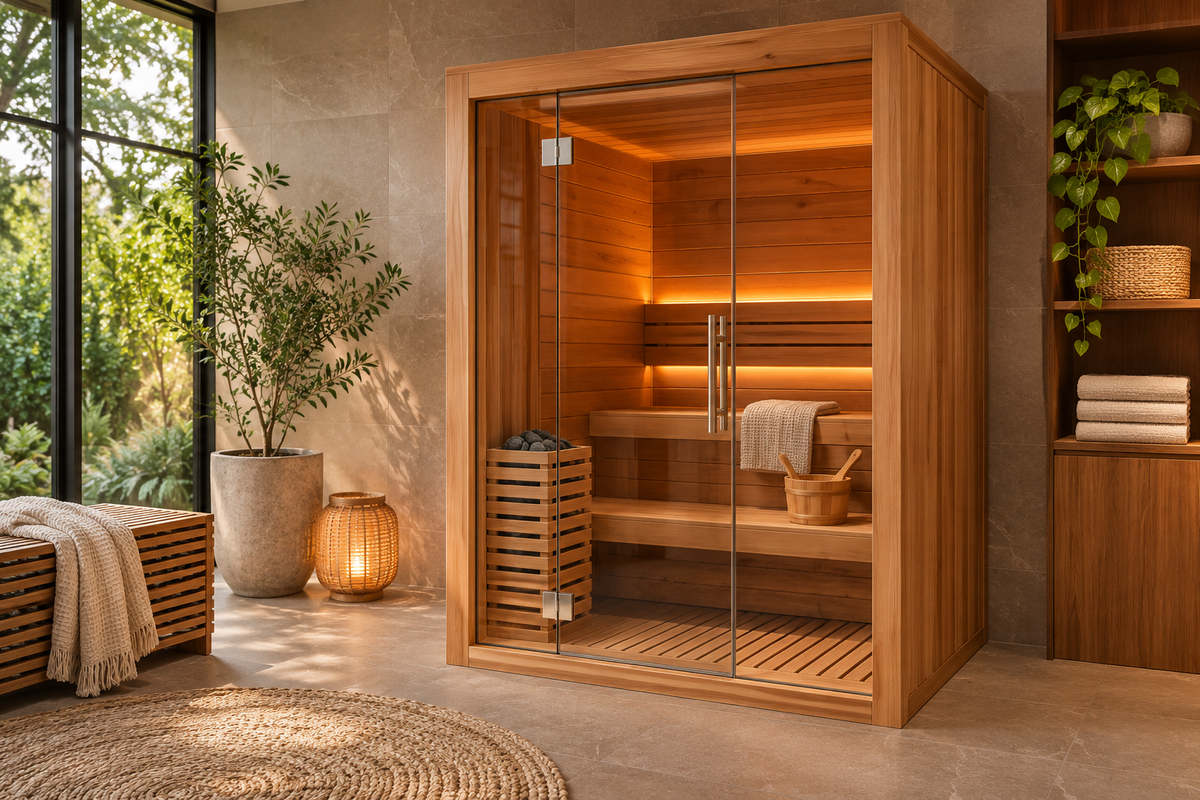
Infrared cabins operate at a lower air temperature than traditional saunas because their heaters warm the bather and nearby surfaces differently. A typical range is about 110–140°F (43–60°C), though the available settings vary by model. Helo’s guidance, for example, gives 120–140°F as a target range for infrared bathing.
Follow your cabin’s manual for warm-up time, temperature limits, and session operation. Do not raise the setting just to match a traditional sauna’s number; the two readings describe different heating experiences.
Why the temperature reading can feel different
A sauna’s displayed temperature is only one part of how the room feels. In a traditional sauna, warm air rises, so the reading can vary by sensor location and bench height. Follow the manufacturer’s instructions for the built-in sensor and any separate thermometer; moving or covering a sensor can interfere with the heater’s controls.
Humidity also affects comfort. Pouring a small amount of water onto approved heater stones creates a brief wave of steam and changes how the heat feels. Use water only if the heater manual permits it, and follow its instructions for the amount and frequency.
How to choose a comfortable setting at home
- Identify your sauna type. Check whether it is traditional, infrared, or a combination unit before choosing a temperature.
- Check the manual. Use the heater or cabin’s approved operating range and the specified control and sensor setup.
- Begin at the lower end. Learn how the room feels, then make small adjustments on later sessions.
- Consider the room setup. Bench height, ceiling height, heater placement, ventilation, and the thermometer’s position can affect the reading and perceived warmth.
- Take a break if the heat feels uncomfortable. Follow the manufacturer’s session and cool-down instructions.
Does a hotter sauna work better?
There is no single temperature that is best for every sauna or session. A high reading is not a measure of sauna quality. The sauna type, room design, comfort, and manufacturer’s operating instructions matter more than chasing the maximum setting.
Sauna temperature FAQs
Is 180°F too hot for a traditional sauna?
180°F is within the commonly cited range for a traditional sauna, but how it feels depends on the sauna, thermometer placement, humidity, and room design. Keep within the manufacturer’s operating limits and lower the setting if the room feels uncomfortable.
Can I use the same temperature in an infrared and traditional sauna?
No. Infrared cabins generally use lower air temperatures than traditional saunas. Use the settings recommended for your model rather than comparing the number on one type directly with another.
Should I turn up the heat to get more steam?
Not necessarily. In a traditional sauna, steam is created when water is poured onto the heater stones, if the heater allows it. Follow the heater manual and use the temperature that feels comfortable.
Explore more sauna planning guides
For help choosing a sauna style, see our Sauna Buying Guide and Traditional vs. Infrared Sauna guide. If you are planning a traditional sauna, our Sauna Heater Sizing Guide can help you understand how room size relates to heater selection. You can also compare indoor saunas, outdoor saunas, and infrared saunas.